
Resources
Validation Studies
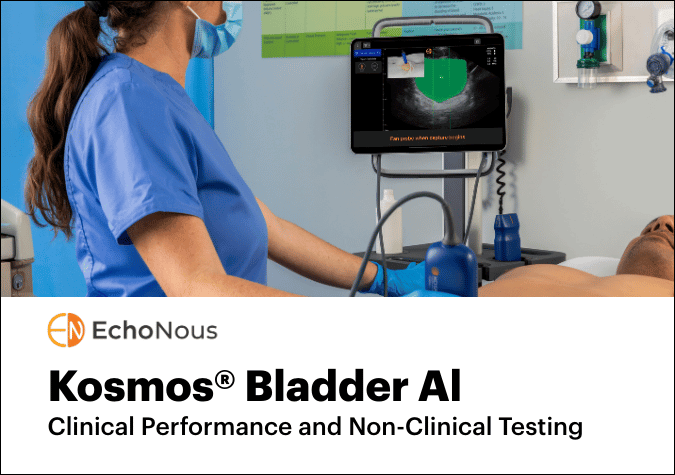
Kosmos Bladder AI Clinical Performance and Non-Clinical Testing
A prospective study was conducted to evaluate the correlation between manual bladder volume determination and Kosmos Bladder Biplane Caliper Volume Al algorithm in a clinical setting.
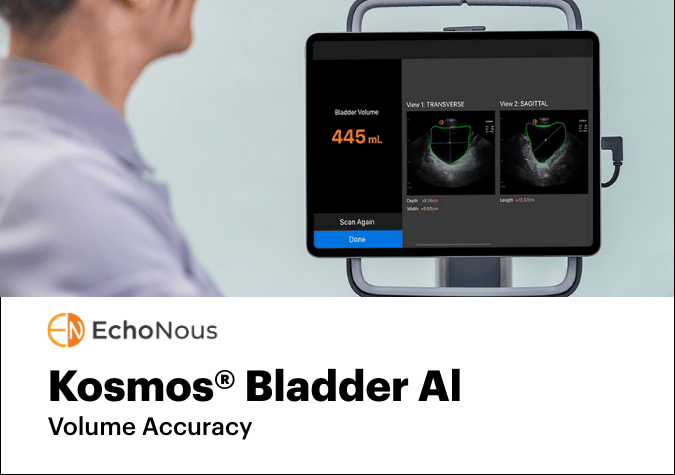
Kosmos Bladder AI Volume Accuracy
Kosmos Bladder testing was conducted to evaluate the accuracy of the Kosmos Bladder Volume AI algorithm against high-precision Industrial CT scanned phantoms.
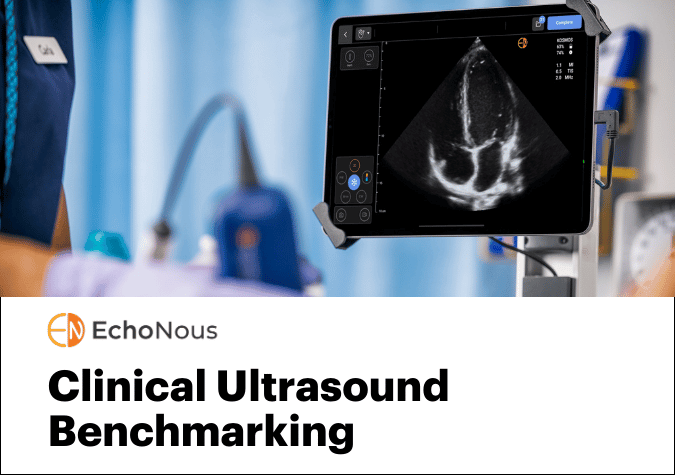
Clinical Ultrasound Benchmarking
Utilization of Kosmos in everyday cardiology practice facilitates diagnosis and management of patients in various settings (ward rounds, CCU, consultations, and E-Med), and has the potential of enhancing patient care at a very low marginal cost.
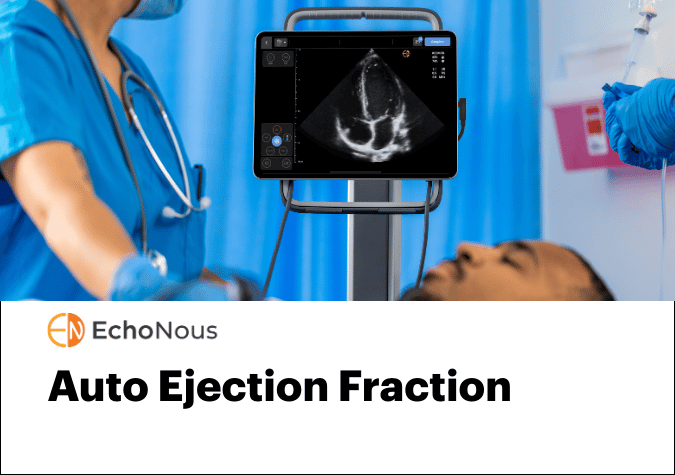
Auto Ejection Fraction
This prospective study, conducted at Mercy Med Clinic (Columbus, GA), validates our automated cardiac assessment tools against a rigorous clinical standard.
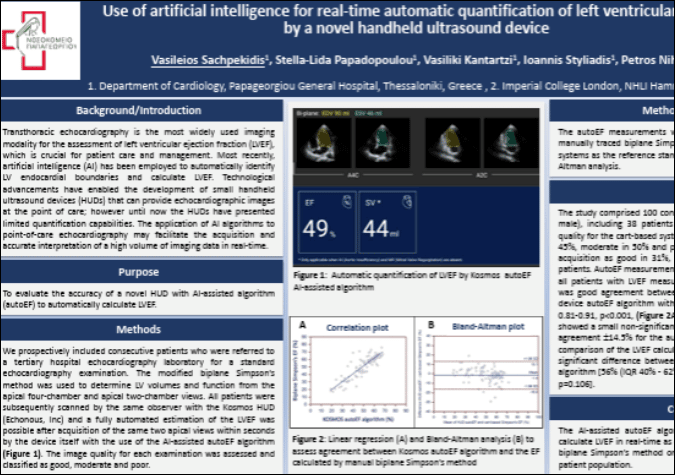
AI-Assisted Quantification of Left Ventricular Ejection Fraction (EF)
Use of artificial intelligence for real-time automatic quantification of left ventricular ejection fraction by a novel handheld ultrasound device.
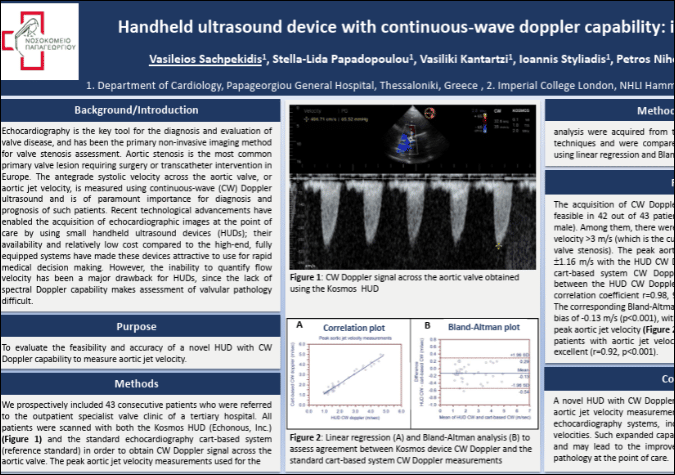
Continuous Wave Doppler Feasibility
Handheld ultrasound device with CW doppler capability: Is it feasible?
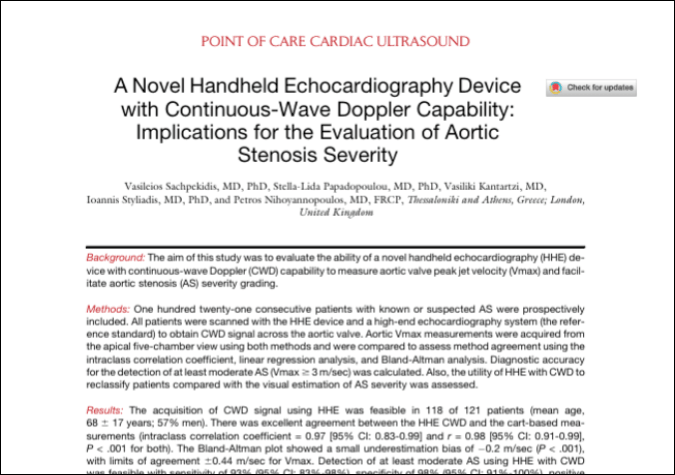
CW Doppler Capability for Aortic Stenosis Severity
The aim of this study was to evaluate the ability of a novel handheld echocardiography (HHE) device with continuous wave Doppler( CWD) capability to measure aortic valve peak jet velocity (Vmax) and facilitate aortic stenosis (AS) severity grading.
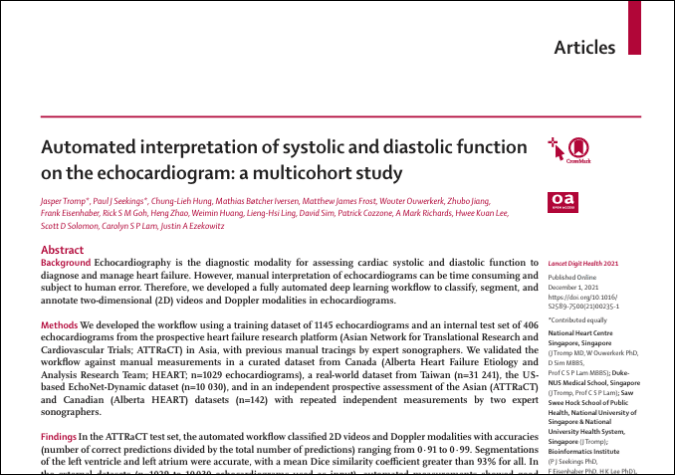
Automated Interpretation of Systolic and Diastolic Function
Echocardiography is the diagnostic modality for assessing cardiac systolic and diastolic function to diagnose and manage heart failure. However, manual interpretation of echocardiograms can be time consuming and subject to human error.
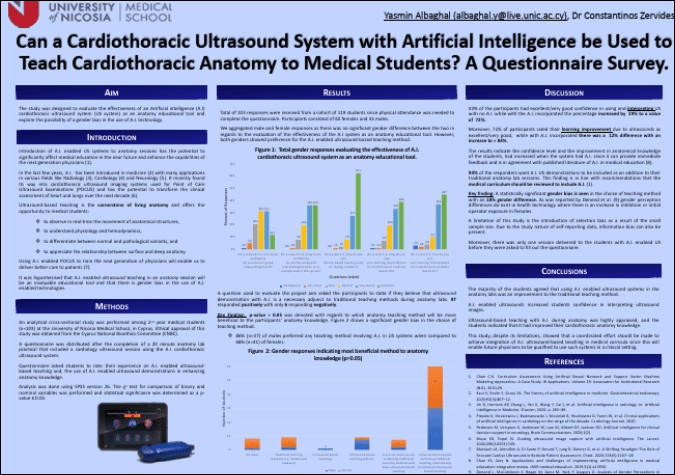
Cardiothoracic Ultrasound with AI to Teach Anatomy
The study was designed to evaluate the effectiveness of an Artificial intelligence (A.I) cardiothoracic ultrasound system (US system) as an anatomy educational tool and explore the possibility of a gender bias in the use of A.I. technology.