Rugged Medical Hardware:
What MIL-STD-810H, IP66, and Drop Ratings Mean for Ultrasound Devices
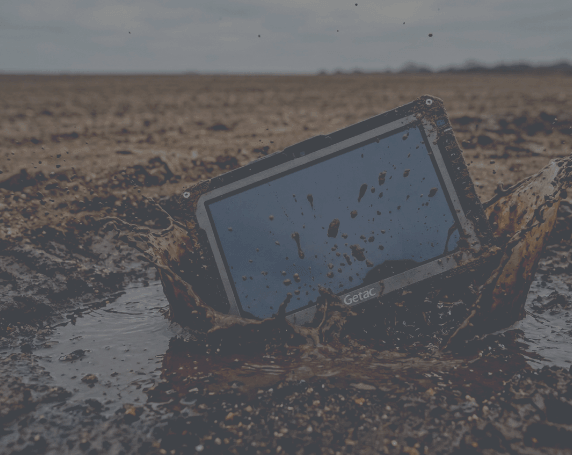
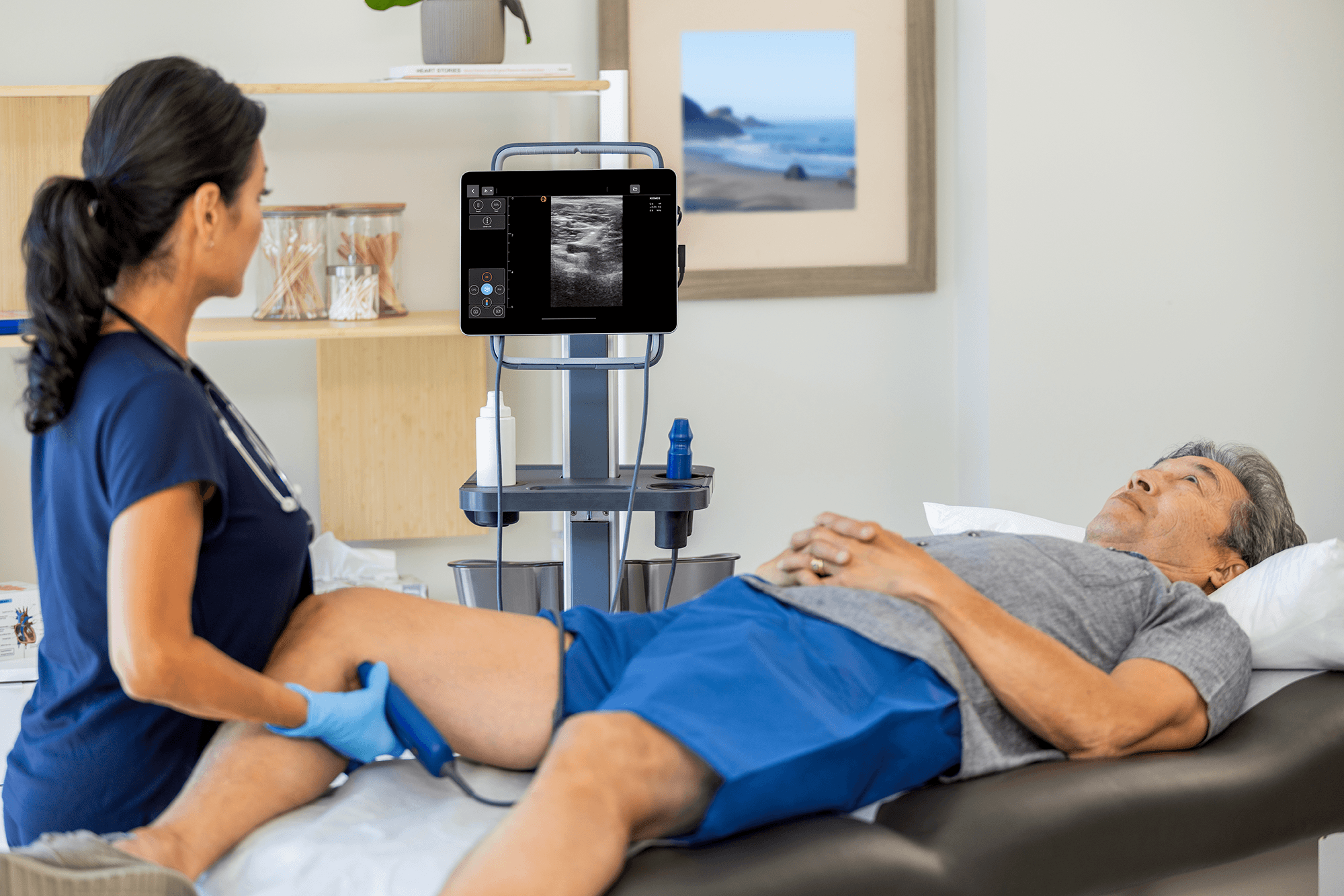
As ultrasound devices become smaller and more portable, they are increasingly being used in harsh environments and settings. A point-of-care ultrasound (POCUS) device today needs to tolerate more than the trip from a hall closet to the patients’ bedside. It might get carried between wards, cleaned repeatedly, and used where a conventional tablet is difficult to handle or read.
Rugged medical hardware specifications (particularly MIL-STD-810H, ingress protection ratings, and drop heights) may help buyers assess those demands. Each describes a different aspect of durability. The value of each specification depends on the test conditions.¹
For a point-of-care ultrasound purchase, one practical question is whether the documented protection matches your needs and workflow. Start with the ratings, then examine the complete system: tablet, probe, connections, power supply, and software.
Table of Contents
- Rugged Medical Hardware:
Why ultrasound hardware might fail in the field
Think through a typical shift: someone passes the probe to a colleague, moves the device through a doorway, wipes it down and returns it to storage. Those ordinary steps create opportunities for dropped probes, trapped cables and damaged connectors. A 2025 review describes how handling, transport and unsuitable cleaning can damage ultrasound components, sometimes without an obvious external defect.²
Fluids and repeated disinfection add different demands. Temperature changes matter during transport or storage, while glare can make a functioning screen harder to use. EchoNous identifies these practical challenges in its discussion of the Kosmos integrated Getac tablet.³
Across a fleet, consider more than repair invoices. Estimate shipping, temporary replacements, staff time coordinating service and periods when a shared device is unavailable. Use your own service records to calculate those costs; a ruggedness label alone does not establish fewer failures or a financial return.
MIL-STD-810H
What the standard means
MIL-STD-810H is a US Department of Defense environmental engineering and laboratory testing standard. Its preparing activity is the Army Test and Evaluation Command. Revision H followed revision G in 2019; the official record lists H with Change 1, dated May 18, 2022.¹
The framework allows tests to be tailored to an item’s expected service environment. It does not prescribe one universal package that every product must pass. Consequently, an “810H” label is insufficient for comparing two devices. The revision identifies the framework; the report identifies the exposure and result.¹
For an ultrasound purchase, ask the vendor which hazards were evaluated:
| Test area | Procurement question |
|---|---|
| Transit drop or shock | Does the report describe accidental handling drops? |
| High and low temperature | Was performance assessed during operation, storage or both? |
| Temperature shock | Were abrupt changes evaluated separately? |
| Humidity | What moisture conditions and exposure duration were used? |
| Vibration | Does the test configuration represent your transport or mounting arrangement? |
| Sand and dust | What exposure was applied, and what functions were checked afterward? |
This is a menu of questions, not a claim that a particular tablet underwent every test.
“Tested to” versus “certified”
“Tested to MIL-STD-810H” should be accompanied by the specific methods and procedures used. If a supplier says “certified,” ask who issued the certificate and what it covers. Neither phrase, standing alone, identifies the relevant evidence.
Request the report or an adequately detailed summary. Look for the exact model and configuration, laboratory, test date, exposure levels, duration, sample count and acceptance criteria. Ask whether the device was operating and which functions were checked afterward.
For ultrasound, add a practical question: did testing establish that the tablet still functioned, or did it also assess the connected imaging system? A screen that turns on is only one part of your acceptance decision.
Example: Kosmos integrated Getac tablet
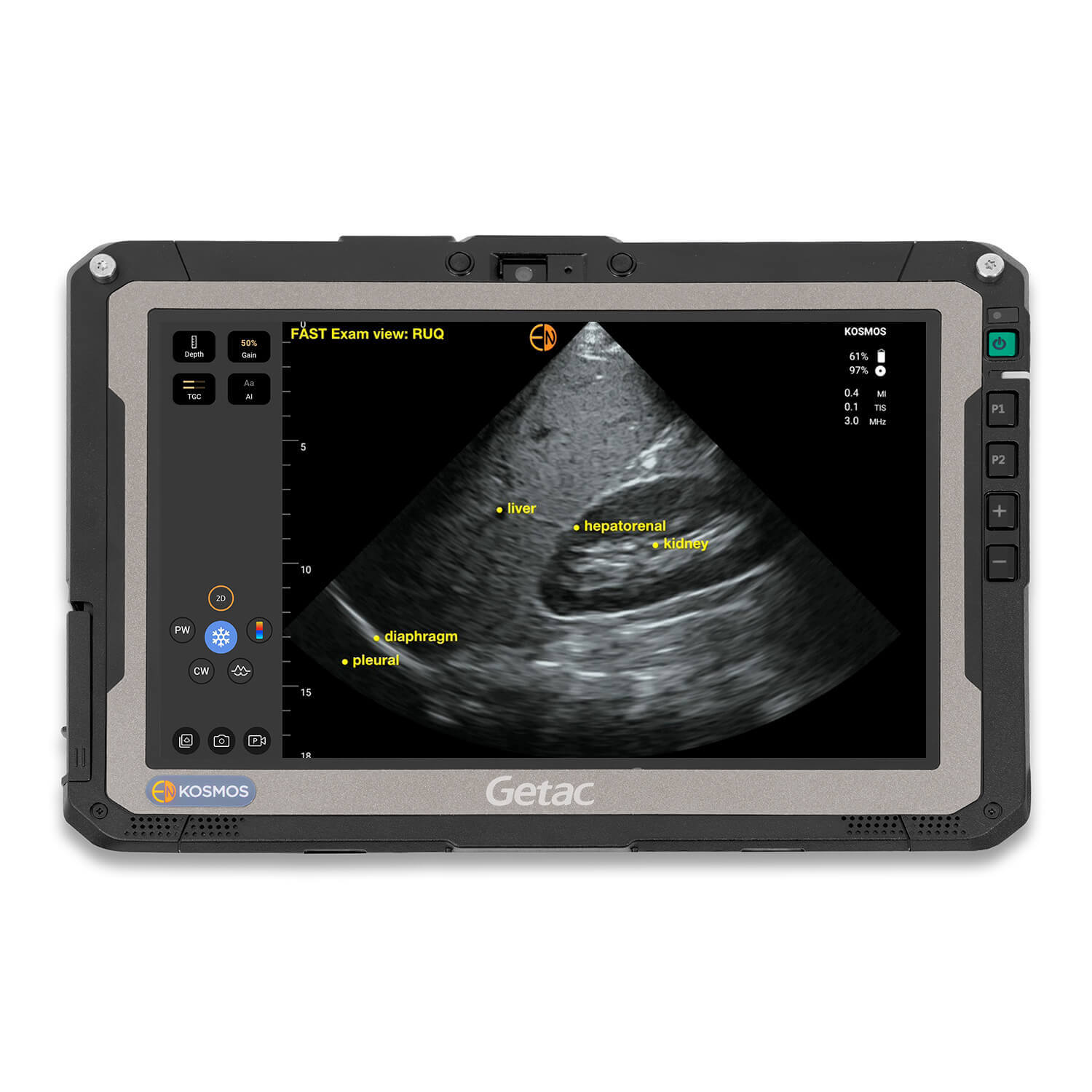
EchoNous offers the Kosmos integrated Getac tablet, a Getac ZX10 variant, as tested to MIL-STD-810H and lists a 6-foot drop rating. Those manufacturer specifications provide a starting point.³
IP ratings explained: what IP66 means
Ingress protection (IP) codes describe enclosure protection using IEC 60529. In the usual two-character code, the first position concerns solid objects and dust; the second concerns water.⁴
IP66 means a dust-tight enclosure with protection against powerful water jets under specified test conditions. It does not establish protection during immersion.⁵
| Rating | Dust protection | Water protection |
|---|---|---|
| IP66 | Dust-tight | Powerful water jets |
| IP67 | Dust-tight | Temporary immersion |
| IPX7 | No dust rating specified | Temporary immersion |
The “X” means that this position does not specify a protection rating. It should not be read as evidence that the device failed a dust test.⁵
IP66 versus IP67 versus IPX7
Choose the rating according to the expected exposure. Water jets and temporary immersion are different test conditions. If your workflow involves both exposures, request documentation covering both.
Likewise, an IP66 label is not permission to use a pressure washer, steam sterilizer or any cleaning technique outside the device’s instructions. Enclosure protection is only one part of the handling information your team needs.
Water resistance is not the same as disinfectant compatibility
A water test does not tell youy whether a particular disinfectant is compatible with a probe lens, tablet housing or cable. The American Institute of Ultrasound in Medicine advises consulting manufacturer instructions for compatible agents and reprocessing methods; unsuitable methods can damage transducers.⁶
Before buying, compare your facility’s cleaning products with the approved instructions for each component. Check the product formulation, concentration, contact time, application method, and any restrictions on immersion. Include the tablet, probe, cable, connector and accessories in that review.
Make this a demonstration requirement: can staff perform the approved cleaning process with the supplies and turnaround time available in your department?
Probe and tablet ratings are separate
EchoNous lists the Getac tablet as IP66. The Kosmos user guide identifies the Torso-One probe as IPX7, meaning protection against temporary immersion.³⁷
Those ratings belong to different components. An immersion rating for the probe does not allow for submerging the tablet or every connection. Use the current instructions applicable to your configuration to establish the permitted immersion boundary and cleaning process. EchoNous’s Product Resources page is the starting point for that documentation.
Drop ratings and operating temperature
What does a 6-foot drop rating tell you?
EchoNous publishes a 6-foot, approximately 1.8-m, drop rating for the Kosmos integrated Getac tablet. The height is useful to know, however it does not explain the entire test.⁸ Follow manufacturer inspection guidance after an actual accident. A tablet’s drop rating does not establish that a separately dropped probe remains suitable for use.²
Operating temperature and storage temperature
An operating range describes conditions for use. A storage range describes conditions for keeping the equipment when it is not operating.
EchoNous lists the Getac tablet’s operating range as −20°F to 145°F, approximately −29°C to 63°C.⁸ However, power configuration matters: Getac’s current ZX10 G2 specification makes its lowest battery-only operating temperature dependent on battery number and capacity.⁹
Confirm the conditions for the supplied G1 configuration rather than importing every specification from the general ZX10 sheet. Check the probe, batteries and charger separately. The tablet’s published range may not be the same as the complete ultrasound system’s approved scanning range.
What makes a rugged tablet suitable for clinical use
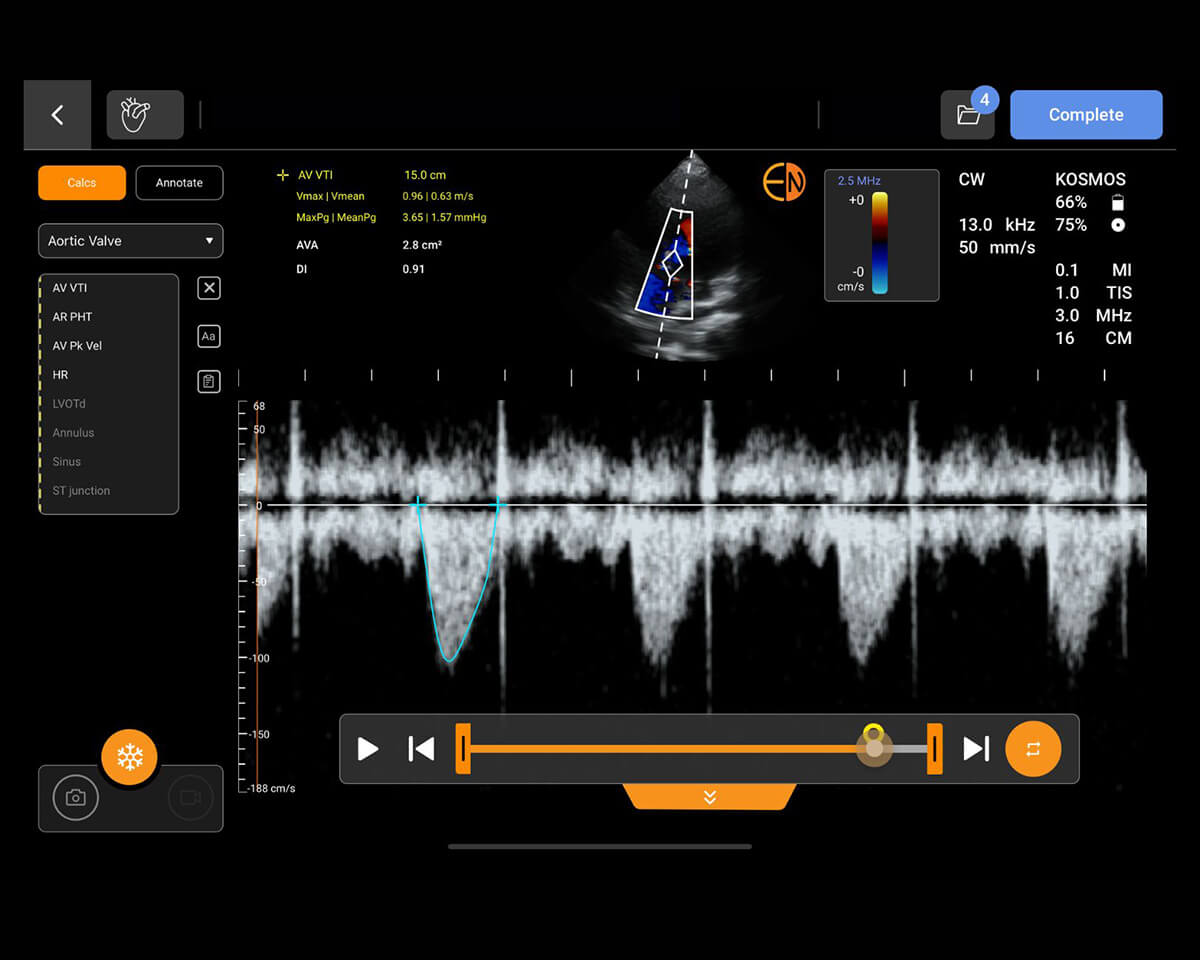
Durability is important to clinical workflow, but its not the only factor. Offering dual swappable batteries, a sunlight-readable display and factory-installed Kosmos software. the Kosmos integrated Getac tablet offers several benefits in demanding clinical environments. Initial setup involves connectivity and probe-license registration.⁸
Fleet management deserves equal attention. Android dedicated-device management can restrict a device to selected applications, often called kiosk mode.¹⁰ Ask the vendor to demonstrate the supported configuration with your information technology team’s management platform. EchoNous describes enterprise management through OEMConfig. That description on its own does not verify every kiosk function you may need.⁸
For image transfer, EchoNous reports Digital Imaging and Communications in Medicine (DICOM) connectivity secured with Transport Layer Security (TLS).⁸ Confirm that your receiving archive supports the proposed connection and test the complete transfer process.
Clinical POCUS consensus guidance supports secure image storage and accessible archiving when resources permit. Encrypted transfer is one element of that workflow; access controls and storage also need attention.¹¹
Finally, request written security-update commitments: patch frequency, support end date, operating-system upgrades and responsibility for compatibility with Kosmos. Include these in the purchasing decision alongside service arrangements and replacement availability.
Buyer’s checklist: rugged medical hardware
| Vendor question | Tablet: published answer or next verification step |
|---|---|
| Which environmental tests apply? | MIL-STD-810H is listed; request methods, procedures and the configuration-specific report. |
| Which component has which IP rating? | Tablet: IP66. Torso-One: documented as IPX7; confirm current applicable instructions. |
| What supports the drop claim? | 6-foot rating; obtain surface, orientations, sample count and functional checks. |
| What temperature limits govern scanning? | Tablet: −20°F to 145°F; verify power conditions and complete-system limits. |
| Are our cleaning products compatible? | Review approved agents and methods for every component. |
| Can we manage and secure the fleet? | Enterprise management and DICOM TLS are described; verify kiosk support and update commitments. |
Published product details above come from EchoNous documentation; Getac’s sheet supplies additional configuration context.³⁷⁸⁹
For broader purchasing context, EchoNous’s Best POCUS Devices of 2026 guide can help frame your shortlist. If bladder assessment is a priority, also review its Best Bladder Scanners of 2026 guide.
Choosing hardware for your setting
Choose rugged ultrasound hardware by matching documented tests to actual handling, cleaning, transport and information-management needs. Keep the tablet and complete-system requirements distinct. Explore the Kosmos integrated Getac tablet, then request the configuration-specific evidence your clinical, procurement and technology teams need to evaluate it.
Frequently asked questions
No. The standard supports tailored testing. Ask which methods and procedures were performed, under what conditions, and on which configuration.¹
IP66 indicates dust-tight protection and resistance to powerful water jets under defined conditions. It does not establish immersion protection or compatibility with disinfectants.⁵⁶
References
- US Department of Defense. MIL-STD-810H: Environmental Engineering Considerations and Laboratory Tests. Change 1 incorporated. May 18, 2022. Accessed October 10, 2026. Official ASSIST document record
- Catalano O, Gagliardi G, Corvino A, Basile L, Varelli C. Damage to ultrasound transducers, cables, and connectors. A pictorial guide to prevention, detection, and management. J Ultrasound. 2025;28(3):543-549. doi:10.1007/s40477-025-01041-8
- EchoNous. Kosmos Tablet G1. Accessed October 10, 2026. Product page
- International Electrotechnical Commission. IEC 60529:1989+AMD1:1999+AMD2:2013 CSV: Degrees of Protection Provided by Enclosures (IP Code). Edition 2.2. Accessed October 10, 2026. IEC publication record
- UL. 2015-16 Guide Information for Electrical Equipment—The White Book. 2015:52. Accessed October 10, 2026. IP classification table
- American Institute of Ultrasound in Medicine. AIUM official statement: guidelines for cleaning and preparing external- and internal-use ultrasound transducers and equipment between patients as well as safe handling and use of ultrasound coupling gel. J Ultrasound Med. 2023;42(7). doi:10.1002/jum.16167
- EchoNous. Kosmos User Guide. Version 8.0. Document P005794-029, revision A. 2024:112. Accessed October 10, 2026. User guide
- EchoNous. New! Kosmos Tablet G1. Accessed October 10, 2026. Launch announcement
- Getac. ZX10 Fully Rugged Tablet: G2 US Product Specifications. Generated September 11, 2026. Accessed October 10, 2026. Specification sheet
- Google. Dedicated device. Android Enterprise. Accessed October 10, 2026. Dedicated-device requirements
- Oto B, Baeten R, Chen L, et al. Best practices for point of care ultrasound: an interdisciplinary expert consensus. POCUS J. 2024;9(1):95-108. doi:10.24908/pocus.v9i1.17240