Can Nephrologists Accurately Assess Heart Function Using AI?
New Research
The link between kidney disease and heart failure is well-established, making cardiac assessment a critical skill in nephrology. However, formal echocardiography – the gold standard for measuring Left Ventricular Ejection Fraction (LVEF) – is typically the domain of cardiologists. A recent piece published in the Journal of the American Society of Nephrology investigates whether Artificial Intelligence (AI) can bridge this gap, allowing nephrologists to perform accurate cardiac assessments at the bedside.
Table of Contents
The Study: Testing AI-Assisted POCUS in Cardionephrology
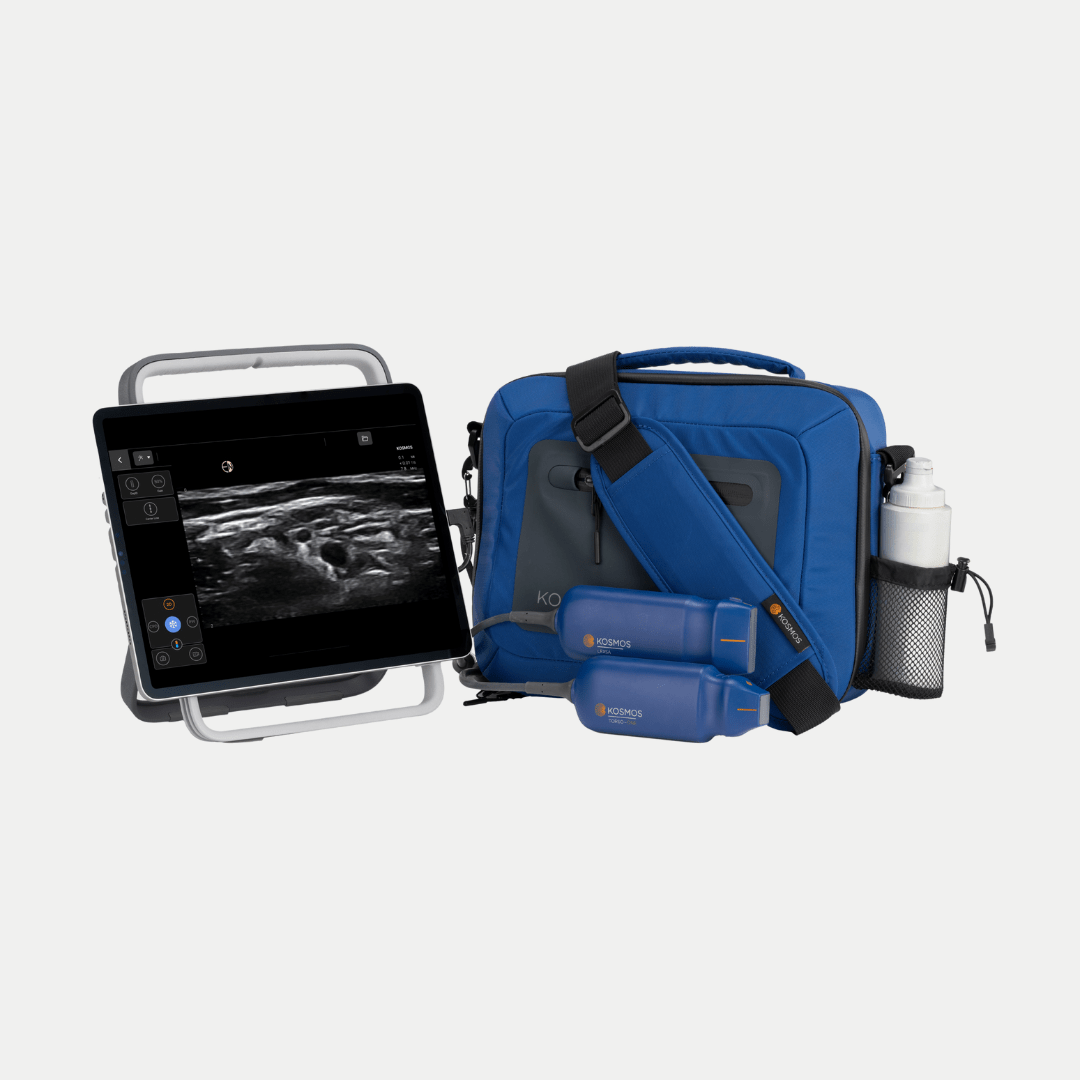
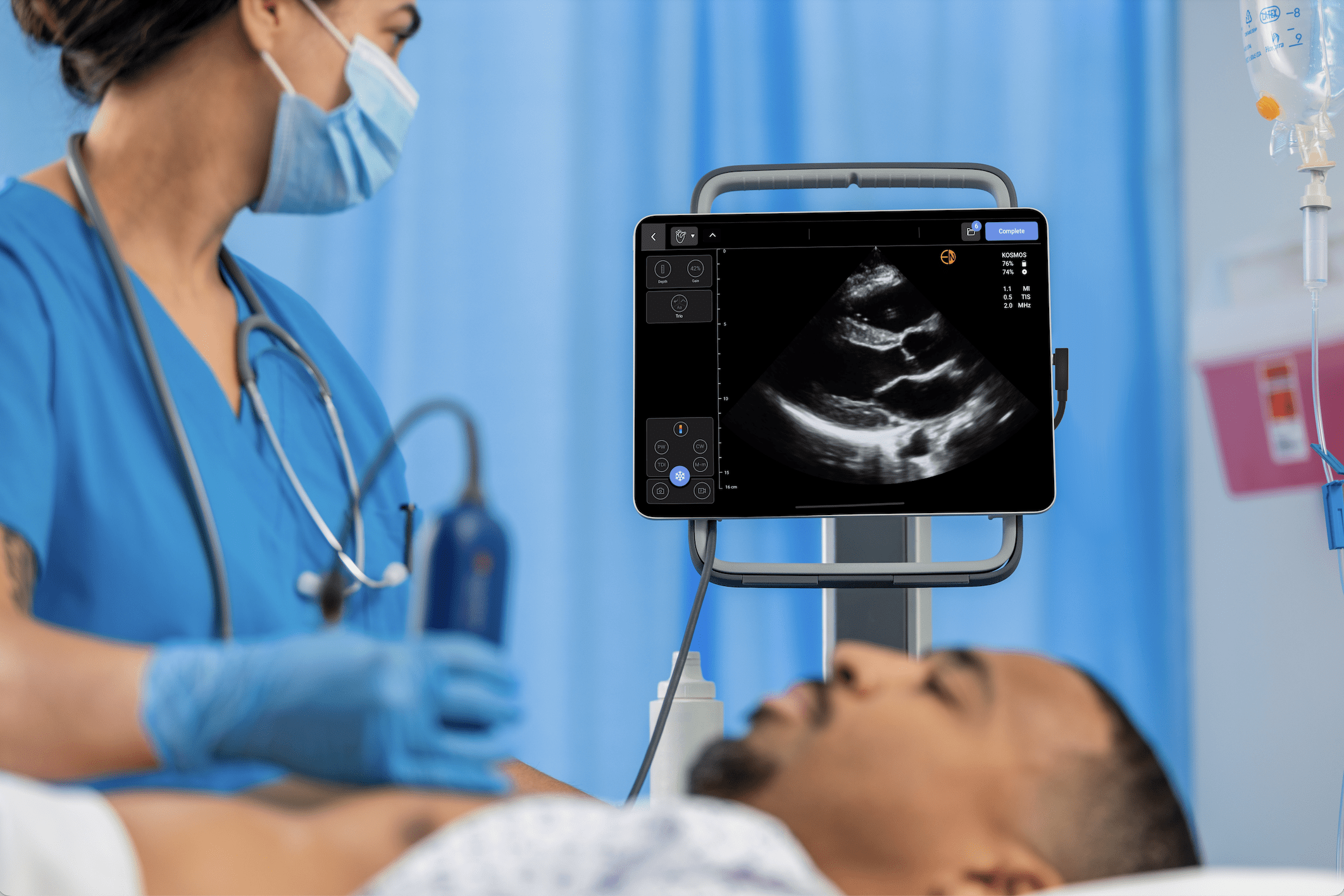
Researchers at a tertiary hospital in Mexico City conducted a retrospective study involving 27 patients with Chronic Kidney Disease (CKD) and heart failure. The goal was to evaluate the feasibility and accuracy of nephrologists measuring LVEF using the Kosmos portable ultrasound device from EchoNous compared to formal echocardiography performed by cardiologists.
Key Findings: Strong Correlation and Accuracy
The results demonstrated that with AI assistance, nephrologists could achieve diagnostic accuracy comparable to specialists:
- Strong Correlation: There was a strong correlation (r=0.825) between the LVEF measurements obtained by nephrologists and those obtained by cardiologists.
- Consistent Results: The mean LVEF measured by nephrologists was 49.5%, nearly identical to the 50.5% measured via formal echocardiography.
- Accurate Classification: The study found consistent classification of heart function (reduced, mildly reduced, or preserved) between the two groups.
Why This Matters
The study concludes that integrating AI-assisted ultrasound into nephrology practice is both feasible and accurate. By enabling nephrologists to reliably assess cardiac function at the point of care, clinicians can potentially expedite diagnosis and improve the management of patients suffering from complex cardiorenal syndromes.
References
- Filardo-Zuniga, Marimar; Nieves Hernández, Luz Atenas; Hernandez-Garcia, Leslie Nahomi; Arvizu Hernández, Mauricio. Feasibility and Accuracy of Left Ventricular Ejection Fraction Assessment by Nephrology Professionals Using Artificial Intelligence: FR-PO0020. Journal of the American Society of Nephrology 36(10S):10.1681/ASN.2025r8zry249, October 2025. | DOI: 10.1681/ASN.2025r8zry249
Q&A: Can Nephrologists Accurately Assess Heart Function Using AI?
The heart and kidneys are deeply interdependent. Patients with Chronic Kidney Disease (CKD) frequently develop heart failure. Traditionally, a nephrologist would have to refer a patient to a cardiologist for a formal echocardiogram to measure Left Ventricular Ejection Fraction (LVEF). This can lead to delays in treatment for cardiorenal syndromes.
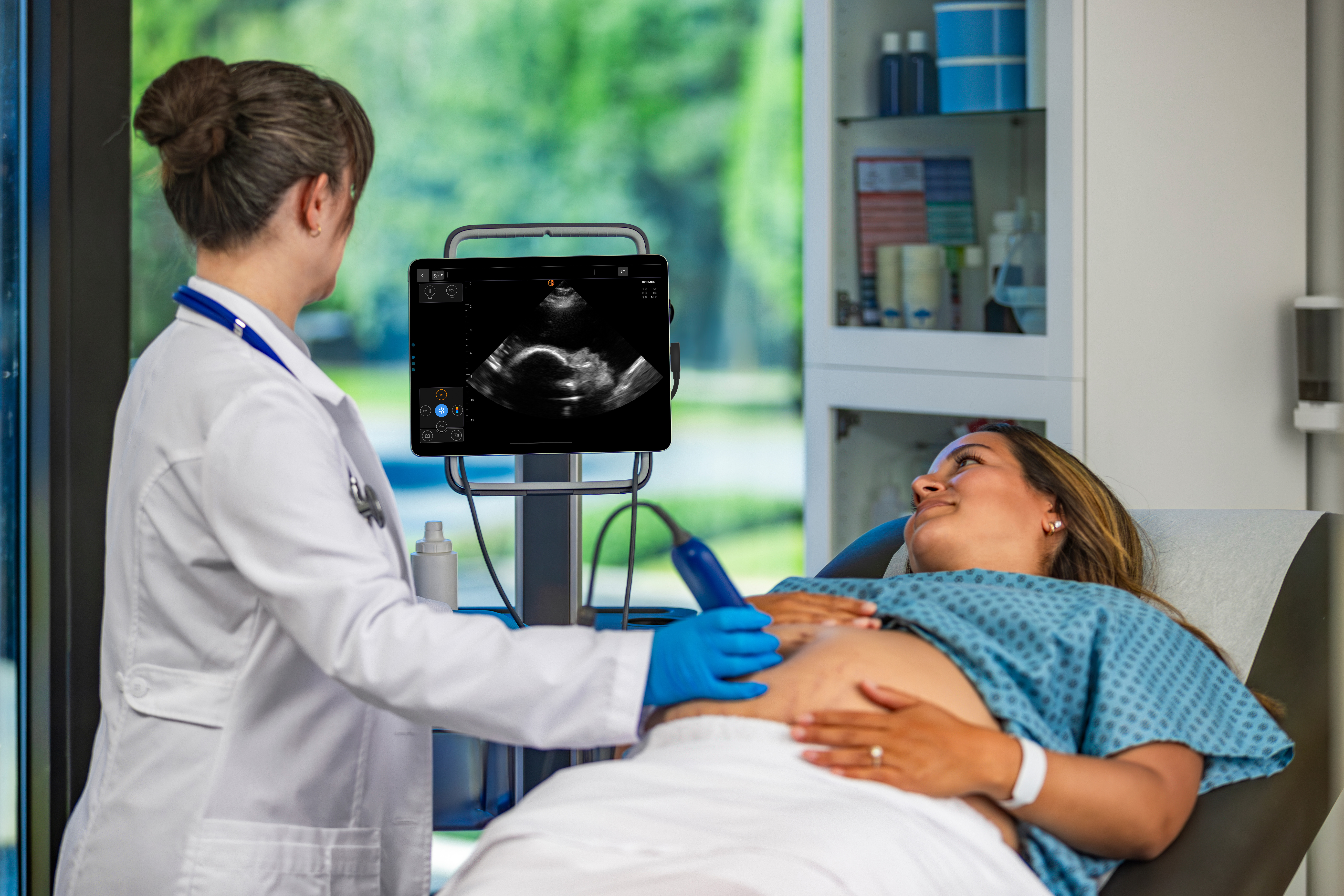
POCUS stands for Point-of-Care Ultrasound. It refers to a portable ultrasound used at the patient’s bedside. In this study, the POCUS device (the Kosmos by EchoNous) was equipped with AI software that guides the user to capture high-quality images and automatically calculates heart function metrics that used to require years of specialized training to interpret.
The results were remarkably consistent. The study found a correlation coefficient of r=0.825, which indicates a very strong relationship between the AI-assisted readings and the gold-standard formal echoes.
Beyond just the numbers, the nephrologists were able to accurately classify patients into three critical clinical categories: reduced, mildly reduced, or preserved heart function. This is vital for deciding whether a patient needs immediate medication changes or fluid management adjustments.