Advancing Perioperative Ultrasound: Dr. Deepak Borde on AI and Echoliteracy
Cardiac anesthesiologists rely on rapid access to accurate patient data. As point-of-care ultrasound (POCUS) evolves, the ability to perform complex assessments at the bedside is becoming a standard part of perioperative patient management.
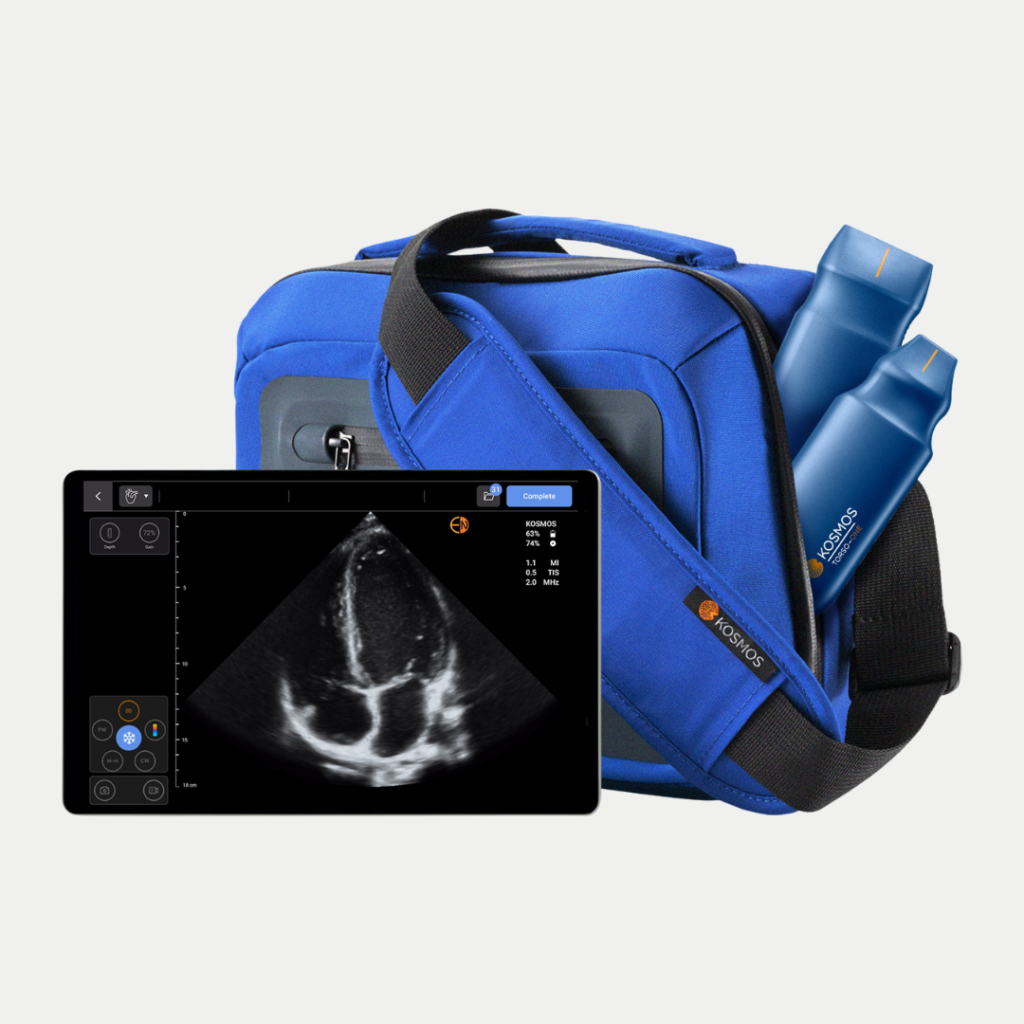
The EchoNous team had the opportunity to speak with Dr. Deepak Borde, a cardiac anesthesiologist based in Aurangabad, India, about his experience with handheld ultrasound technology.1 His work examines how AI-driven portable devices like Kosmos can address traditional clinical constraints, streamline workflows, and help train “echoliterate” physicians.
Table of Contents
Meet Dr. Deepak Borde
Dr. Deepak Borde is a cardiac anesthesiologist with a focus on perioperative ultrasound. Operating in Aurangabad, India, he is highly involved in POCUS education and has helped train over 5,000 anesthetists across the country.
Recognizing the clinical potential of handheld ultrasound, Dr. Borde recently conducted a 60-patient study evaluating the Kosmos device’s ability to perform comprehensive preoperative assessments 1. His primary objective was to see how point-of-care technology compares to traditional cart-based machines in real-world clinical environments.

Diastolic Function Assessment in Anesthesiology
Dr. Borde’s research focuses on comprehensive cardiac evaluations. A major factor in this research was the Continuous Wave (CW) Doppler capability of the Kosmos device.
“We tried to focus on a sort of unique aspect of EchoNous: that you could provide continuous wave Doppler,” explains Dr. Borde. “That’s the only handheld device at the moment to give a continuous wave Doppler. Then this idea chipped in: can we do comprehensive diastolic function assessment with this?”
For the anesthesia community, understanding diastolic function is a core component of patient management that relies on a complex algorithm. Using Kosmos to acquire the images and US2.ai software for automated analysis, Dr. Borde’s team successfully acquired advanced measurements including Left Atrial Strain.1 These measurements aligned with the latest American Society of Echocardiography guidelines.1, 2
Dr. Borde notes that identifying advanced diastolic dysfunction (such as Grade III) changes the clinical approach in key ways:
Fluid Management: Clinicians will restrict fluids. For a superficial surgery, Dr. Borde notes his team might finish the procedure using only 100 milliliters of normal saline.
Medication and Monitoring: Clinicians have a lower threshold for starting vasoactive medicines and upscaling monitoring, such as placing a central line, even if the patient presents with a normal ejection fraction.
Maximizing Efficiency in the Pre-Op Area
Time is a major constraint in the pre-operative setting. Because diastolic function is dynamic, a previous echocardiography scan from a patient’s chart may no longer be clinically relevant by the time they reach surgery.
“I cannot spend 45 minutes doing a preoperative scan. I have got only 5 minutes, maximum 10 minutes, to do my stuff and arrange things in my mind simultaneously,” Dr. Borde emphasizes.
Traditional cart-based ultrasound systems are often too bulky and slow for the fast-paced pre-op holding area. Handheld POCUS offers a practical alternative.
“By the time the cart-based machine starts booting in, you are done with a point-of-care device,” says Dr. Borde. He estimates that he gives 60% to 65% of the credit to the physical portability of the device, and the remaining 35% to 40% to the integrated AI that expedites the analysis.
Real-World Constraints: Regulation and Cost
While the clinical benefits are measurable, Dr. Borde acknowledges the practical hurdles of adopting new technology in India.
Strict Regulations: The PCPNDT Act is a federal law in India aimed at prohibiting fetal sex determination. It requires heavy documentation and municipal approvals for any portable ultrasound device, which can slow the adoption of new equipment.
Facility Budgets: Cost plays a significant role in hospital purchasing decisions. Dr. Borde advises that there needs to be a reasonable price gap between handheld and cart-based systems. Because handheld devices like Kosmos are more affordable, hospitals can equip multiple intensive care units simultaneously rather than sharing a single cart.
Advancing “Echoliteracy”
As handheld ultrasound becomes more common, widespread education is the next logical step. Dr. Borde’s department has set a goal for every anesthesiologist to become “echoliterate.” Currently, his entire team is certified in the basic FATE (Focused Assessed Transthoracic Echocardiography) examination.
Advancements in artificial intelligence are helping to support this goal. New features in educational platforms, such as the Kosmos app, provide expanded auto-guidance for additional cardiac views and an Auto Doppler function that expedites the process of capturing waveforms.
Looking ahead, Dr. Borde is eager to test these exact features to see how a novice user can perform comprehensive measurements while relying on AI image guidance. By lowering the barrier to entry, handheld devices offer an affordable, high-performance option that enables non-cardiologists to perform detailed assessments at the bedside.
References
- EchoNous. Dr. Deepak Borde | EchoNous Interview. Internal Interview Transcript. 2026.
- Nagueh SF, Smiseth OA, Appleton CP, et al. Recommendations for the Evaluation of Left Ventricular Diastolic Function by Echocardiography: An Update from the American Society of Echocardiography and the European Association of Cardiovascular Imaging. J Am Soc Echocardiogr. 2016;29(4):277-314.
Q&A: Dr. Deepak Borde on Perioperative Ultrasound
In a 60-patient study, cardiac anesthesiologist Dr. Deepak Borde used the Kosmos device—which offers Continuous Wave (CW) Doppler in a handheld form factor—together with US2.ai analysis software to explore comprehensive diastolic function assessment, acquiring measurements such as Left Atrial Strain. Dr. Borde reports these aligned with current American Society of Echocardiography guidance. This reflects his investigational clinical experience; capabilities should be evaluated against each device’s cleared indications for use.
In Dr. Borde’s experience, the portability and fast startup of a handheld device fit the time constraints of the pre-operative holding area, where he often has only 5–10 minutes per patient. He attributes roughly 60–65% of that advantage to physical portability and the remainder to integrated software that helps expedite analysis. Individual results and workflows vary by setting and user.
Dr. Borde describes adjusting his clinical approach when he identifies advanced (Grade III) diastolic dysfunction—for example, taking a more conservative approach to fluids and having a lower threshold for vasoactive medications and additional monitoring such as a central line, even when ejection fraction is normal. These are his clinical judgments; management decisions remain the responsibility of the treating clinician.
Echoliteracy is the goal of equipping every anesthesiologist with working bedside ultrasound proficiency. Auto features in the Kosmos app—including auto-guidance for additional cardiac views and an Auto Doppler function that helps capture waveforms—are designed as tools that assist a trained user and still require human review and oversight. Dr. Borde is interested in studying how such tools may help less-experienced users, with the aim of lowering the barrier to bedside assessment.