The Best Point-of-Care Ultrasound (POCUS) Devices in 2026: Comparison, Reviews, and Buyer’s Guide
Point-of-Care Ultrasound in Practice
In point-of-care ultrasound (POCUS), the clinician performing the exam is often the one treating the patient, interpreting the images, and acting on the findings, all within the same encounter. The American College of Emergency Physicians defines it as ultrasound performed by clinicians at the patient’s bedside that answers a specific clinical question.1 The exams are focused rather than comprehensive: whether there is free fluid in the abdomen, whether the heart is contracting adequately, whether a vessel is open and unobstructed, whether the bladder is full.
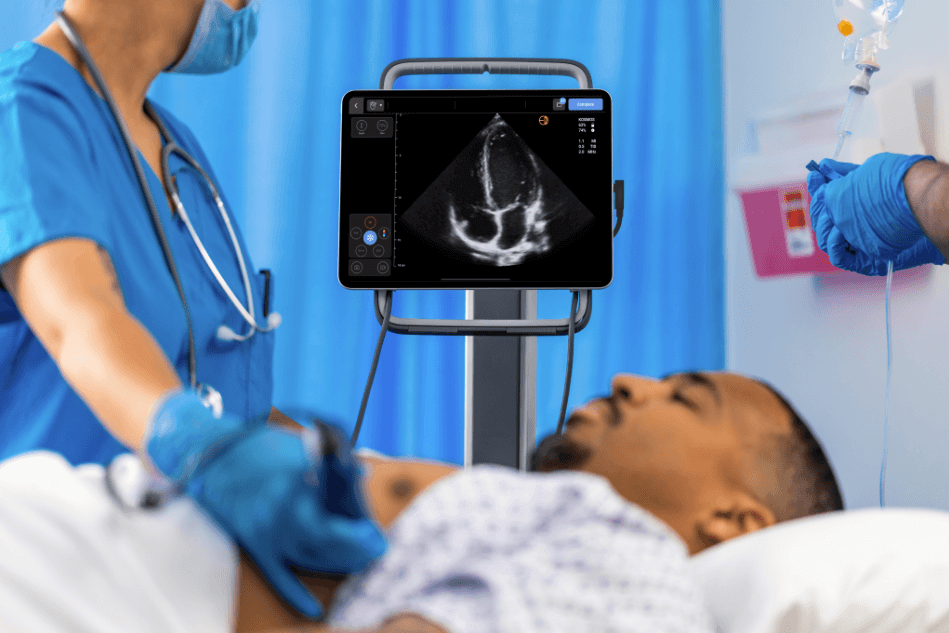
POCUS is now routine in emergency departments, intensive care units, and general wards, and is spreading into primary care, perioperative settings, and prehospital care.2 Point-of-care work is also expected to leave a record. Professional statements call for documentation in the medical record, image archiving, quality assurance, and credentialing standards,3,4 which is why connectivity and archiving are included in a device comparison alongside imaging capability.
Signify Research put the handheld ultrasound market on a 24.7 percent compound annual growth rate for 2021 to 2026, forecast to pass $500 million by 2026, at a global average selling price of around $4,000.5 That has produced a crowded field: roughly a dozen competing vendors, a capability range spanning a twentyfold price difference, and differences in imaging modes, subscription terms, and warranty that manufacturer marketing pages generally do not specify.
Table of Contents
- The Best Point-of-Care Ultrasound (POCUS) Devices in 2026: Comparison, Reviews, and Buyer’s Guide
- Point-of-Care Ultrasound in Practice
- Multi-Departmental Perspectives
- Two Categories of Device
- Specifications that Differentiate the Field
- Warranty and Total Cost of Ownership
- Handheld and Ultraportable: Doppler and Cleared Modes
- Handheld and Ultraportable: Price, Subscription, and Warranty
- Compact and Cart Systems: Doppler and Cleared Modes
- Featured Comparison: Kosmos Plus vs Compact and Cart Systems
- Device Reviews: Handheld and Ultraportable
- When a Console Remains the Appropriate Purchase
- Selection by clinical setting
- Buyer Checklist
- Scoring summary
- Closing Thoughts
- References
- Q&A: Frequently Asked Questions
Disclaimer: This Buyer’s Guide has been produced by EchoNous, Inc., a designer, manufacturer and distributor of the Kosmos Point-of-Care Ultrasound (POCUS) device. The information provided in this Buyer’s Guide is for general educational and informational purposes only. Although citations to independent sources are included within this Guide, EchoNous, Inc. makes no representations or warranties of any kind, express or implied, about the completeness, accuracy, or reliability of the information. Any reliance you place on this information is strictly at your own risk. In no event will EchoNous be liable for any loss or damage arising out of, or in connection with, the use of this guide.
Multi-Departmental Perspectives

A POCUS purchase is often reviewed by multiple hospital departments, each of which may have distinct priorities. Clinicians and program directors likely need to know which exams a device is cleared for and the level of training it demands. Procurement may evaluate the five-year Total Cost of Ownership (TCO) rather than just the initial purchase price, factoring in subscription models and warranty terms. Biomedical engineering may prioritize disinfection ratings, network connectivity, and service agreements.
Finally, Finance and Executive leadership may need to validate the business case, which relies heavily on whether the clinical workflows will allow these exams to be billed.
Two Categories of Device
For the purposes of this review, we are evaluating two broad categories of point-of-care ultrasound devices in 2026. Handheld (sometimes referred to as pocket) and ultraportable systems pair a probe with a phone or tablet at prices between roughly $3,000 and $13,000. Compact and cart-based systems provide a dedicated console with a full transducer family, from the mid $20,000s into the $60,000s and beyond.
This guide covers general point-of-care ultrasound: the multipurpose scanning that emergency physicians, intensivists, hospitalists, primary care clinicians and others perform across cardiac, lung, abdominal, and vascular targets on the same device. Two adjacent segments buy on different criteria and are noted separately. Regional anesthesia is a specialized workflow organized around needle guidance for nerve blocks. Dedicated musculoskeletal and aesthetic practice is organized around high-frequency superficial imaging. Both are substantial markets in their own right and not included in the scope of this review.
Within general use, exam mix is a key consideration. Cardiac exams place the highest demand on a device. Aortic stenosis, mitral regurgitation, and tricuspid regurgitation are assessed in part with doppler and “jets”. Continuous wave Doppler is required to measure them because pulsed wave aliases at those velocities. Diastolic function is assessed mainly with tissue Doppler. Both modes were once available only on console systems. That has changed,⁶ and it is the development most likely to alter a 2026 shortlist.
Methods and Sources
Imaging modes and Doppler capabilities are taken from each device’s FDA 510(k) clearance record, which states modes of operation in standardized language. Where a manufacturer’s current specification page documents a mode added after the clearance cited, both sources are given.
Prices are cited where the manufacturer publishes them. EchoNous,7 Butterfly Network,8 and Clarius9 publish exact or estimated pricing. Pricing from GE HealthCare, Philips, Fujifilm Sonosite, Mindray, and Exo are not publicly available, and price bands for those systems are EchoNous internal market assessment rather than quoted figures.
The scoring summary is EchoNous’s assessment. It covers dimensions verifiable against the cited documents: clinical breadth, Doppler completeness, published needle-guidance features, whether AI is included or held behind a subscription, subscription terms, published warranty length, and transducer breadth. Image quality is covered separately.
Specifications that Differentiate the Field
Clinical Breadth and Transducer Strategy
General point-of-care work spans cardiac, lung, abdominal, and vascular targets, so a key specification is how much range one device covers. Single-probe systems cover more anatomy per probe but may compromise on image quality and at the extremes of depth and frequency. Multi-probe systems image better in each range and cost more to equip. Neither approach dominates. A consideration is whether one clinician scans across many regions or a department standardizes on a small number of exams.
Doppler Completeness
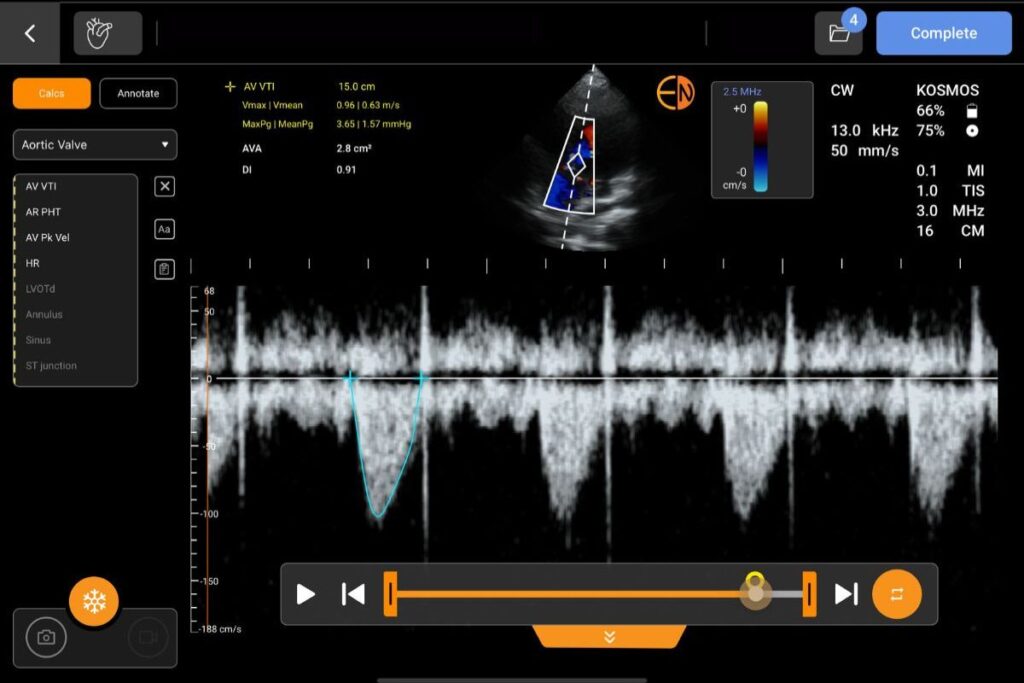
Color and pulsed wave Doppler are near universal. Continuous wave Doppler is found on a few handheld devices. With CW a clinician can measure high-velocity flow across a stenotic or regurgitant valve without aliasing. Ultimately, valve quantification requires CW. Tissue Doppler imaging matters for diastolic assessment. Both modes appear in the clearance record.
Subscriptions
Two devices in the handheld tier put spectral Doppler behind a paid tier. On Butterfly,8 pulsed wave Doppler requires the Advanced membership rather than the base Core membership, and a membership is required to use the probe at all. On Clarius,10 pulsed wave Doppler and DICOM require an active Essentials membership, though the scanner itself functions without one. Five-year cost, rather than purchase price, separates these models.
Cleared AI and Automated Measurements
Automated ejection fraction, B-line counting, bladder volume, and VTI are now common. Three variables differentiate them: whether the specific tool is FDA cleared, whether it is included in the purchase, and whether it removes a manual step that would otherwise be performed under time pressure.
Vascular Access and Bladder
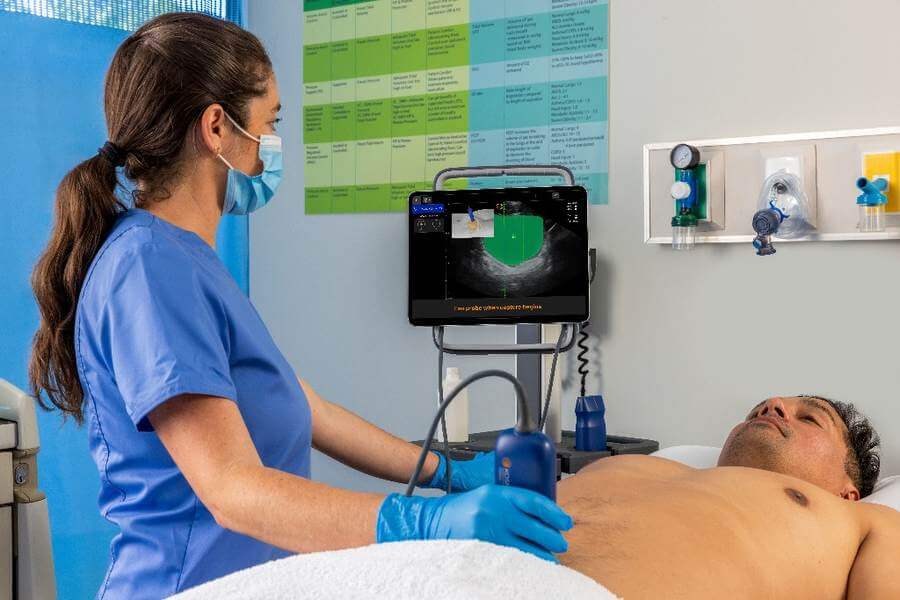
Vessel imaging at shallow depth requires exceptional high-frequency linear performance. While some devices focus on software-based needle recognition, such as Clarius with Needle Enhance9,10, the Mindray TE7 Max¹¹, and the GE Venue family¹², the foundation of successful peripheral IV access is achieving superior baseline image quality to clearly visualize the anatomy without relying solely on software enhancements. The Kosmos Lexsa linear array probe utilizes proprietary, high-performance PZT (piezoelectric) transducers, which deliver sharper image clarity, deeper penetration, and greater durability compared to silicone-based semiconductor probes. To directly support these critical workflows, EchoNous offers a dedicated Kosmos Vascular Access nursing bundle published under $12K⁷. This package pairs the Lexsa probe with advanced imaging features, providing nurses with a highly reliable, PZT-driven solution to confidently execute peripheral IV access procedures.
Beyond vascular access, evaluating bladder fullness and urinary retention directly addresses another primary bedside clinical question outlined in standard POCUS guidelines¹. Consolidating both vascular and pelvic screening onto a single handheld solution streamlines routine nursing workflows without requiring separate single-purpose bladder scanners¹.
Warranty and Total Cost of Ownership
Warranty terms in the handheld tier range from one year to five. Combined with subscription costs, warranty is a swing factor in five-year cost, and it may be missing from consideration in capital requests.
Form Factor and Deployment Setting
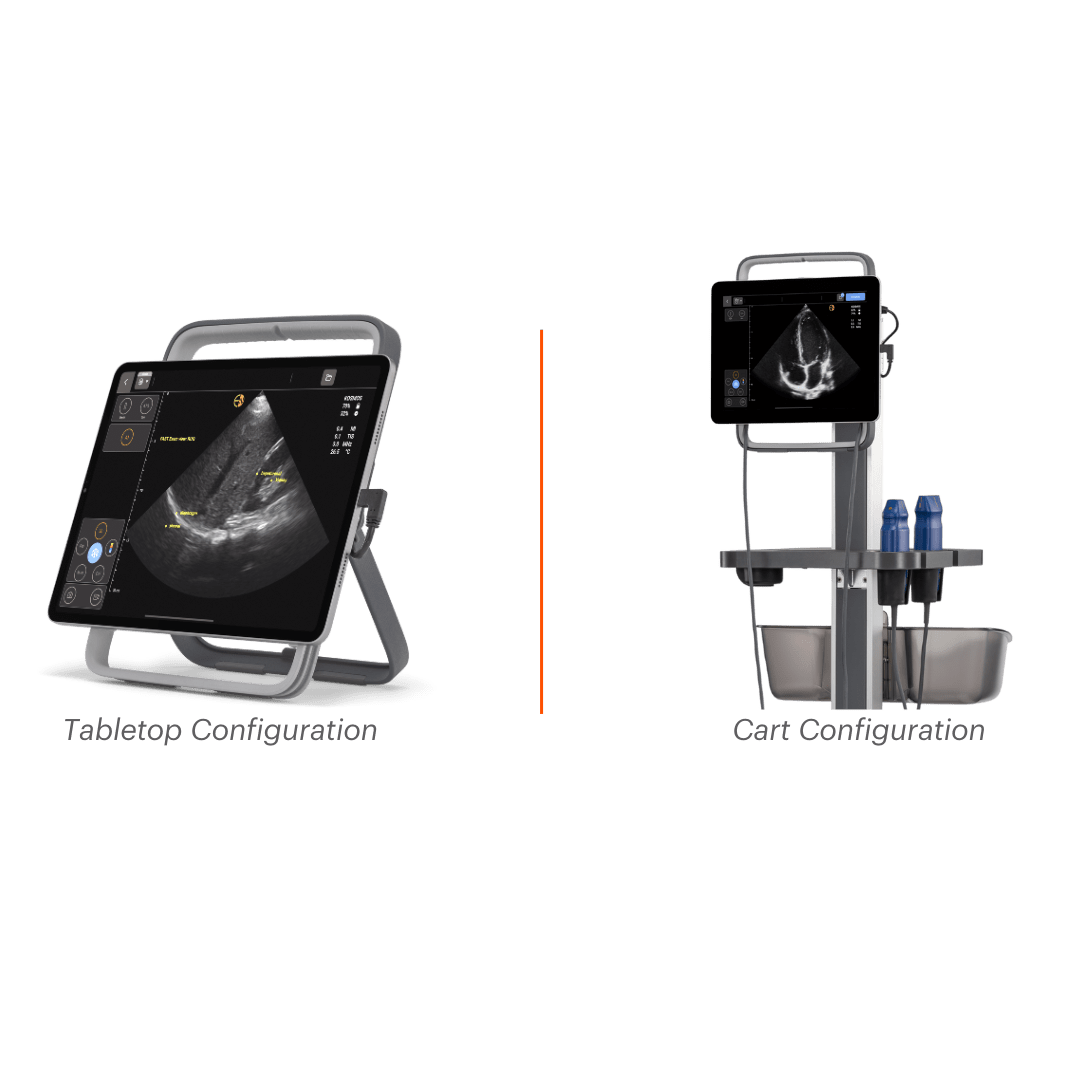
Handheld systems go where a cart cannot. Some handheld platforms also mount on a medical-grade stand, which matters for scheduled studies where a clinician needs both hands and a fixed screen. A unique feature of the Kosmos on a stand with Link is that it allows for charge while scanning. This powerful enhancement transforms deployment settings by allowing the system to seamlessly adapt to any clinical environment. Whether deployed as a compact tabletop configuration, mounted on an IV pole, or utilized on a full medical-grade cart, the Kosmos Link ensures multi-probe connectivity and all-day uninterrupted scanning without the battery anxiety typical of ultraportable devices.
Warranty and Total Cost of Ownership
In the 2012 Medicare Part B data, 391 of 52,928 emergency medicine practitioners, or 0.7 percent, received reimbursement for limited ultrasound, covering 16,389 scans in total. Practitioners in counties with an emergency medicine residency were far more likely to bill than those without.13
The binding constraint is documentation rather than the device. Separate payment requires documented interpretation and permanently stored images. Payers generally reimburse one interpretation per ultrasound category per day. ACEP notes that “limited ultrasound” is a coding and billing level describing imaging of an organ or organ system that is not comprehensive, which is the level most point-of-care exams fall under.1,14 Programs that address this directly find real headroom: a pediatric emergency department quality initiative raised complete point-of-care ultrasound documentation from 62 percent to 91 percent, and correct CPT selection from 92 percent to 95 percent.15
Policy change has not moved the picture much. Comparing 2022 with 2023 at a single center, the 2023 CMS billing changes produced no significant difference in the volume of point-of-care ultrasound billed or in the codes used, and point-of-care ultrasound billing affected the evaluation and management code in 4.1 percent of visits.16
For inpatient work the exam is generally absorbed into the DRG, and ultrasound guidance codes are frequently bundled into the procedure they support rather than paid separately.14
Two consequences follow for device selection. A business case built on billing capture will overstate the return for most departments. And the documentation features serve a different purpose than revenue: image archiving, DICOM export, and a quality-assurance trail support credentialing, privileging, and peer review whether or not a claim is ever submitted. A subscription tier that gates DICOM export is a clinical governance question and not just a cost question.8,10
Handheld and Ultraportable: Doppler and Cleared Modes
Figure 1. Doppler capability by device, from each manufacturer’s FDA 510(k) clearance record.
| Device | Color / Power | Pulsed wave | Continuous wave | Tissue Doppler | Source |
| EchoNous Kosmos | Yes | Yes | Yes | Yes | K2423216 |
| Butterfly iQ3 | Yes | Yes (spectral) | No | No | K23280817 |
| Philips Lumify | Yes (Color) / No (Power) | Yes | No | No | K25255818 |
| GE Vscan Air | Yes | Yes | No | No | K25008719 |
| Clarius HD3 | Yes | Yes | No | No | K23270420 |
| Exo Iris | Yes | Yes | No | No | K222198,21 specs22 |
| Mindray TE Air | Yes | Yes | No | Yes | K25002423 |
Handheld and Ultraportable: Price, Subscription, and Warranty
Figure 2. Commercial terms. “Not published” indicates the manufacturer does not publish the figure, not that the feature is absent.
| Device | Published price | Subscription required | Available with Subscription | Warranty |
| EchoNous Kosmos | List price $5K for Torso or Lexsa devices; Kosmos Nursing Bundle under $12K; Kosmos Plus under $21K7 | No7,24 | Not applicable | 5 years, all transducers24 |
| Butterfly iQ3 | $3,8998 | Yes, to use the probe8 | PW and power Doppler, AI tools, Biplane at Advanced tier ($420/yr or $1,500 one-time)8 | 3 years8 |
| Philips Lumify | Not published | No for imaging25 | Reacts tele-ultrasound is a separate subscription25 | Not published |
| GE Vscan Air | Not published | Not published | Not published | Not published |
| Clarius HD3 | From $5,395 plus membership 9 | No to scan; yes for advanced modes10 | PW Doppler, DICOM, cloud storage, specialty packages ($695/yr)10 | Not published |
| Exo Iris | Not published | Not published | Exo Works workflow software22 | Not published |
| Mindray TE Air | Not published | Not published | Not published | Not published |
Compact and Cart Systems: Doppler and Cleared Modes
Figure 3. Compact and cart systems, on the same standard. Kosmos Plus is shown for comparison.
| System | Category | Continuous wave | Tissue Doppler | Source |
| EchoNous Kosmos Plus | Handheld plus stand | Yes | Yes | K2423216 |
| Fujifilm Sonosite PX / LX | Compact / cart | Yes | Yes | K251106,26 K21376327 |
| GE Venue, Venue Go, Venue Fit | Compact / cart | Yes | Not stated in summary | K25132228 |
| Philips Compact 5000 Series | Compact / cart | Yes | Yes | K24280029 |
| Mindray TE7 Max | Compact / cart | Not stated in summary | Not stated in summary | Manufacturer page11 |
Featured Comparison: Kosmos Plus vs Compact and Cart Systems
Figure 4. Kosmos Plus vs Compact and Cart Systems
| Category | Kosmos Plus | Compact and Cart Systems |
| Published price | Under $21K7 | Not published by manufacturer, estimated at roughly $25K to $70K |
| Continuous wave Doppler | Yes6 | Yes on Sonosite PX/LX,26 GE Venue family,28 Philips Compact 500029 |
| Tissue Doppler imaging | Yes6 | Yes on Sonosite PX/LX26 and Philips Compact 500029 |
| AI included in purchase | AI FAST, Auto EF, Auto Doppler, Auto Preset24 | Varies. GE Venue Fit12 includes Auto VTI and Real-Time EF; Philips30 includes Auto Measure and Auto Strain LV |
| Transducer family | Phased (Optimized for full torso imaging), linear, | Full family including TEE, endocavity, and high-frequency linear26,30 |
| Warranty | 5 years, all transducers24 | Varies. Mindray11 publishes 5 years on TE7 Max |
| Form factor | Handheld, and on a medical-grade stand24 | Console on a cart |
| Where it does not fit | TEE, endocavity, 3D/4D | Bedside use where a cart cannot go |
Pricing note. GE HealthCare, Philips, Fujifilm Sonosite, and Mindray do not publish list pricing for these systems. The comparison band is EchoNous internal market assessment, not a quoted figure.
Device Reviews: Handheld and Ultraportable
Kosmos by EchoNous
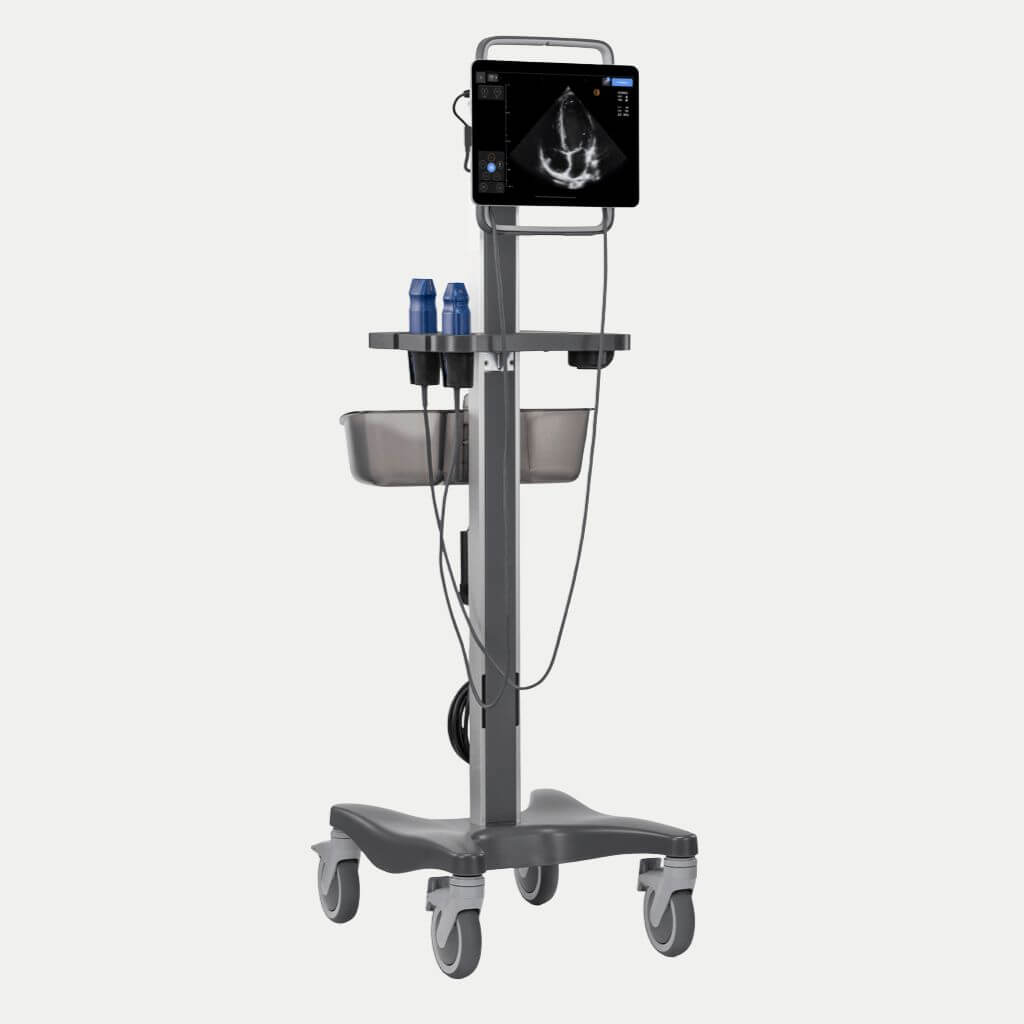
Kosmos is the only handheld-capable device in this comparison whose FDA clearance record lists continuous wave Doppler, tissue Doppler imaging, and combined B+CW mode. CW has been in the cleared mode set since 202131 and appears in the current 2025 clearance.6 Philips’ 2026 Lumify clearance18 corroborates this from outside EchoNous: that filing uses Kosmos32 as a secondary predicate device and prints a side-by-side mode table showing CW Doppler on Kosmos and absent on Lumify. Kosmos is one of the few handheld-form-factor systems with the mode.
Strengths
Beyond CW and TDI, the cleared set includes color and PW, so the Doppler package is complete for focused cardiac work.6 AI FAST, Auto EF, Auto Doppler, and Auto Preset are included in the purchase with no subscription, and all transducers carry a five-year warranty, the longest term published among the devices compared here.24 EchoNous publishes pricing, which is unusual in this market: Kosmos Mobile from $7.7K and Kosmos Plus under $21K.7 The platform runs both handheld and on a medical-grade stand, so one purchase covers bedside scanning and scheduled studies.24 Vendor-published benchmarking across more than 1,200 patients reports EF correlation of 0.87 and CW Doppler correlation of 0.98 against cart-based echo, with a bias of 0.15 m/sec.33
Considerations
Full-body coverage requires more than one transducer. In the 2024 expert comparison of six handhelds, reviewers praised Kosmos image quality and Doppler but criticized probe size and the multi-probe requirement.34 There is no wireless transducer; the probe is cabled to the display device. Kosmos, Butterfly,8 Clarius,20 Exo,22 and Mindray23 all offer some level of automated bladder volume, with a separate review finding Kosmos with the highest reported accuracy, and no needle tracking or needle visualization feature of the kind Clarius10 and the Mindray TE7 Max11 provide. The benchmarking data cited above33 is vendor-published rather than peer-reviewed, and was collected at a single institution.
Butterfly iQ3
Butterfly is one of the largest handheld ultrasound vendors5 and uses the most consolidated single-probe design in this comparison. Its Ultrasound-on-Chip semiconductor transducer covers whole-body imaging from one probe across a 1 to 12 MHz range, and its 2024 clearance added the iQ Slice and iQ Fan modes.17 At $3,899 it is the lowest-priced device in this comparison.8
Strengths
Hardware cost is the lowest of any device here, and the warranty runs 3 years.8 One probe covers whole-body imaging, which may simplify training and cleaning. The cleared mode set is broad, covering B, M, color, power, spectral PW, Biplane, and needle modes,17 and the AI portfolio includes Auto Bladder Volume and Auto B-Lines.8
Considerations
There is no continuous wave Doppler and no tissue Doppler in the cleared mode set, which rules the device out for valve quantification.17 A membership is required to use the probe at all, and the $299/yr Core tier does not include pulsed wave Doppler; that requires the $420/yr Advanced tier or a $1,500 one-time purchase.8 In the 2022 four-device expert comparison, Butterfly did not lead on image quality.35
Philips Lumify
Lumify25 is a mature platform with three purpose-built transducers and Philips’ imaging processing chain, including Tissue Harmonic Imaging, SonoCT, and xRes. Philips25 reports up to 7.5 hours of continuous scanning, the longest figure published among the devices compared here.
Strengths
No subscription is required for imaging. The purchase includes the transducers, app, software upgrades, support, and education, along with three dedicated transducers (S4-1 phased, C5-2 curved, L12-4 linear) rather than one compromise probe.25 Enterprise procurement and service relationships are already in place at most health systems.
Considerations
The cleared mode set is B, PW, color, combined, and M only, with no continuous wave and no tissue Doppler.18 Transducers are cabled to the smart device, there is no wireless option, and Reacts tele-ultrasound is a separate subscription.25 Philips does not publish list pricing or warranty terms.
GE Vscan Air
GE is one of the largest handheld ultrasound vendors.5 The Vscan Air CL configuration pairs a curved and a linear array in a single wireless dual-head probe.19
Strengths
The wireless dual-head design is still uncommon in this tier, and it covers deep and superficial imaging without changing probes. Cleared modes cover B, color, PW Doppler, M, combined, and harmonic imaging.19
Considerations
There is no continuous wave Doppler and no tissue Doppler in the cleared mode set.19 GE does not publish list pricing, warranty terms, or subscription terms for Vscan Air. The device is cleared as a general imaging device rather than a cardiac quantification tool,19 so the cardiac calculation package should be confirmed against the quoted configuration.
Clarius HD3
Clarius9 has the broadest probe lineup among the devices compared here: eight scanner types spanning a 1 to 20 MHz range, including endocavity and a dedicated 20 MHz linear for superficial work. That makes it the strongest fit for musculoskeletal, aesthetics, and private practice.
Strengths
The L20 HD3 and the EC7 HD3 endocavity scanner anchor the widest probe range here, and every scanner is fully wireless with Wi-Fi and Bluetooth.9 Needle Enhance and specialty software packages cover MSK, vascular, breast, OB, and aesthetics.10 Entry pricing is published from $5,395 plus membership.9
Considerations
There is no continuous wave and no tissue Doppler in the cleared mode set.20 Pulsed wave Doppler, DICOM, and cloud storage all require the $695/yr Essentials membership. The scanner still scans without one, but loses those functions.10 Battery life is roughly 60 minutes of scan time,9 and each probe is a separate purchase, so full coverage is expensive.
Exo Iris
Exo22 takes the most distinct technical approach in this group. Iris uses a 2D matrix array of 4,096 individually controlled pMUTs on silicon rather than conventional piezoelectric crystals, across a 1.5 to 12 MHz range in a 300 gram probe.
Strengths
The matrix array gives single-probe whole-body coverage, and the probe is IP67 rated with two hours of battery scan time, above most of the tier.22 Exo Works integrates workflow, billing, and QA.22
Considerations
There is no continuous wave Doppler. Exo’s own specification page lists M, B, color, power, and pulsed wave only.22 The 2022 clearance listed a narrower mode set (B, B+color, B+M) and PW appears on the current specification page, so the quoted configuration should be confirmed.21,22 Exo does not publish list pricing or warranty terms, and the platform has the smallest installed base and shortest clinical track record of any device here.
Mindray TE Air
The Mindray TE Air36 carries more console-tier capability than the rest of this group. It is the only handheld besides Kosmos whose clearance record includes tissue Doppler imaging,23 it is IP68 rated for full immersion, and it ships with 11 exam presets including transcranial imaging.
Strengths
Tissue Doppler imaging in the cleared mode set is rare in this tier.23 Full immersion should support high-level disinfection, and the probe creates its own hotspot, so it works without hospital network access.36 The battery delivers 90 minutes of scan time with roughly a 35 minute fast charge to 90 percent.36
Considerations
There is no continuous wave Doppler in the cleared mode set.23 The single phased array probe runs at 2.0 to 4.0 MHz, making this a cardiac and abdominal device rather than a full-body one. Superficial and high-frequency work needs another device.36 Mindray does not publish list pricing or warranty terms for TE Air.
When a Console Remains the Appropriate Purchase
The compact and cart tier is where continuous wave Doppler lives. Fujifilm Sonosite PX and LX,26,27 the GE Venue family,28 and the Philips Compact 5000 Series29 all list CW Doppler, and the Sonosite26 and Philips29 systems list tissue Doppler imaging as well. Buying into this tier also provides access to a full transducer family, including TEE, endocavity, and high-frequency linear probes, plus 3D and 4D imaging on the Philips systems.29,30
What has changed is that CW Doppler is no longer exclusive to this tier. Kosmos Plus lists CW and TDI in the same standardized clearance language, at a published price under $21,000.6,7 For a department whose capital request is driven specifically by the need to quantify valve gradients or assess diastolic function, that changes which tier has to be evaluated first.
It does not eliminate the reason to buy a console. If the department needs transesophageal echo, endocavity imaging, 3D or 4D, transcranial Doppler, or a shared system that a sonographer will run for scheduled studies all day, a compact or cart system remains the correct purchase. CW Doppler alone no longer justifies the console tier. The full transducer family and the advanced modes still do.
Selection by clinical setting
Emergency department
Breadth and durability matter more than valve quantification. Butterfly iQ317 and Exo Iris22 cover the most anatomy per probe; the Mindray TE Air36 carries the highest published ingress rating at IP68. If the department also runs focused cardiac studies and needs one device for both, the Doppler-complete option is Kosmos.6
ICU and critical care
Cardiopulmonary imaging with repeat scans on the same patient. Tissue Doppler is useful for diastolic assessment, which narrows the handheld field to Kosmos and Mindray TE Air.6,23 Automated EF and VTI reduce keystrokes during resuscitation.
Cardiology and focused cardiac
Doppler capability is the determining specification in this setting. Valve quantification requires continuous wave Doppler. Among handhelds only Kosmos lists it;6 otherwise the answer is a compact or cart system with CW such as the Sonosite PX and LX,26 the GE Venue family,28 or the Philips Compact 5000 Series.29
Anesthesia and vascular access
Nerve and vessel imaging at shallow depth, so high-frequency linear performance and needle guidance lead. Clarius L15 or L20 HD3 with Needle Enhance is the strongest handheld fit;9,10 the Mindray TE7 Max11 and the GE Venue family12 offer needle recognition. Kosmos has a dedicated vascular access configuration published under $12K.7
Internal medicine, hospital medicine, and primary care
In non ED settings, IM/PCP users scan less often and need more help acquiring the image. Guided acquisition and automated measurement matter more than mode depth. Price and subscription terms usually decide it, which favors Butterfly8 on entry cost and Kosmos7 or Lumify25 on five-year cost.
Musculoskeletal, sports medicine, and private practice
High-frequency superficial imaging. Clarius9,10 has the clearest advantage with L15 and L20 HD3 probes and an MSK software package.
Medical education and training programs
Durability, cleanability, cost per seat, and whether the license model scales. Subscription terms diverge most sharply here: per-probe membership caps and seat pricing differ substantially between Butterfly,8 Clarius,10 and the no-subscription platforms. Training resources belong in the same comparison. EchoNous publishes Kosmos EDU, a non-clinical training app for clinicians from medical school through attending practice, not intended for diagnostic use.38 Its real-time AI, Trio, provides automated guidance, grading, and labeling on 10 views of the cardiac anatomy, and the app also carries AI FAST view identification and anatomical labeling, Auto EF, Auto Preset, Auto Doppler, and PW, tissue, and CW Doppler. A learner therefore gets view identification and quality feedback while scanning, rather than only in review with a supervising clinician. These remain instructional tools that require interpretation by a qualified user.
Buyer Checklist
Questions to consider when evaluating your next POCUS purchase:
- Does the cleared mode set include continuous wave Doppler, and is it required for the intended exams?
- Will these exams be separately billed, or absorbed into the DRG? A return-on-investment case built on billing capture will not hold if they are not billed.13,16
- Does the workflow produce a documented interpretation and permanently stored images, which separate payment requires14?
- What are the capabilities for Nursing Teams? Can the device be used by nurses and physicians with different applications?
- Is tissue Doppler imaging cleared, if diastolic assessment is in scope?
- Which features sit behind a subscription, and what happens to them if the subscription lapses?
- What is the five-year cost: hardware, subscription, and out-of-warranty repair combined?
- How long is the warranty, and does it cover transducers?
- How many transducers does full clinical coverage require, and what does each cost?
- Is the probe wireless or cabled, and does that matter in the intended environment?
- Can the platform mount on a stand if scheduled studies are part of the workload?
- What is the disinfection rating, and does it meet local infection-control policy?
- Does DICOM export and EHR integration require an added subscription tier?
- Which AI tools are FDA cleared?
- Is a trial available before committing?
Scoring summary
The table below is EchoNous’s assessment. A dash indicates the manufacturer does not publish the information, scored as unknown rather than as a deficiency. Image quality is separately referenced in three independent expert comparisons.34,35,37
| Device | Doppler set | Nursing Capability | AI included | Subscription burden | Warranty | Probe breadth | Total |
| EchoNous Kosmos | 5 (color, PW, CW, TDI) | 5 (Nursing Bundle) | 5 (all included) | 5 (none) | 5 (5 years) | 2 (2 probes, phased array and linear) | 27 |
| Butterfly iQ3 | 3 (no CW or TDI) | 3 (NeedleViz)8 | 2 (gated at Advanced) | 1 (required to scan) | 3 (3 years) | 3 (1 probe, whole body) | 15 |
| Philips Lumify | 3 (no CW or TDI) | – | 3 | 4 (imaging unrestricted) | – | 3 (3 probes) | 13 |
| GE Vscan Air | 3 (no CW or TDI) | – | 3 | – | – | 3 (dual-array probe) | 9 |
| Clarius HD3 | 3 (no CW or TDI) | 4 (Needle Enhance)10 | 2 (gated at membership) | 2 (PW and DICOM gated) | – | 5 (8 probe types) | 16 |
| Exo Iris | 3 (no CW or TDI) | – | 3 | – | – | 3 (1 probe, whole body) | 9 |
| Mindray TE Air | 4 (TDI, no CW) | – | 3 | – | – | 2 (phased array only) | 9 |
Closing Thoughts
In this comparison, no single device wins: the devices are not competing on the same question. The field, as reviewed, segments on three specifications: whether continuous wave Doppler is available, what a subscription gets you and what happens when it lapses, and what five years costs rather than what’s on the first purchase order. Though continuous wave Doppler is no longer confined to the console tier6,7, that does not shrink the case for a cart. A department that needs transesophageal echo, endocavity imaging, 3D or 4D, transcranial Doppler, or a system a sonographer will run all day still needs a console. It does mean that a capital request driven specifically by valve quantification now has to evaluate both tiers rather than one.
Commercial terms deserve the same scrutiny as the imaging specifications, and they are where the published information is thinnest. Four of the seven handheld platforms compared here do not publish list pricing, warranty terms in this tier run from one year to five, and subscription models differ in kind rather than only in price. A membership can be required to use the probe at all,8 or optional but load-bearing for pulsed wave Doppler, DICOM, and cloud storage.10 Those questions are answered in a quote, not on a specification page.
Confirm the quoted configuration against the clearance record rather than the marketing page, because the two diverge, and this guide found several cases where a mode appears on a current specification page but not in the filing cited.21,22 Then scan the same patients with two or three devices before committing. Image quality is the one dimension this comparison does not score, and it is the one most reliably settled in a side-by-side trial.
References
- American College of Emergency Physicians. Ultrasound guidelines: emergency, point-of-care, and clinical ultrasound guidelines in medicine. ACEP policy statement, approved April 2023. Ann Emerg Med. 2023;82(3):e115-e155. doi:10.1016/j.annemergmed.2023.06.005. Accessed August 7, 2026. https://doi.org/10.1016/j.annemergmed.2023.06.005
- Diaz-Gomez JL, Mayo PH, Koenig SJ. Point-of-care ultrasonography. N Engl J Med. 2021;385(17):1593-1602. doi:10.1056/NEJMra1916062. PMID: 34670045. Accessed August 7, 2026. https://pubmed.ncbi.nlm.nih.gov/34670045/
- Kirkpatrick JN, Panebianco N, Diaz-Gomez JL, et al. Recommendations for cardiac point-of-care ultrasound nomenclature. J Am Soc Echocardiogr. 2024;37(9):809-819. doi:10.1016/j.echo.2024.05.001. PMID: 39230540. Accessed August 7, 2026. https://pubmed.ncbi.nlm.nih.gov/39230540/
- Lee JY, Conlon TW, Fraga MV, Bauer AJ, Soni NJ, Chen AE, Kaplan SL. Identifying commonalities in definition and governance of point-of-care ultrasound within statements from medical organizations in the United States: a scoping review for a shared understanding. J Clin Ultrasound. 2023;51(9):1622-1630. doi:10.1002/jcu.23574. PMID: 37850556. Accessed August 7, 2026. https://pubmed.ncbi.nlm.nih.gov/37850556/
- Signify Research. Education is the catalyst to increased adoption of handheld ultrasound. Accessed August 6, 2026. https://www.signifyresearch.net/insights/education-is-the-catalyst-to-increased-adoption-of-handheld-ultrasound/
- US Food and Drug Administration. 510(k) premarket notification K242321: Kosmos. EchoNous, Inc. Decision date April 25, 2025. Accessed August 6, 2026. https://www.accessdata.fda.gov/cdrh_docs/pdf24/K242321.pdf
- EchoNous. Cost of ultrasound devices. Accessed August 6, 2026. https://echonous.com/cost-of-ultrasound-kosmos/
- Butterfly Network. Pricing: iQ+, iQ3, and Compass. Accessed August 6, 2026. https://www.butterflynetwork.com/pricing
- Clarius Mobile Health. Clarius ultrasound scanners and pricing. Accessed August 6, 2026. https://store.clarius.com/
- Clarius Mobile Health. Membership information. Accessed August 6, 2026. https://store.clarius.com/pages/membership-information
- Mindray. TE7 Max portable ultrasound. Accessed August 6, 2026. https://www.mindray.com/na/products/ultrasound/point-of-care/te-series/te-7-max-portable-ultrasound-machine/
- GE HealthCare. Venue Fit ultrasound system. Accessed August 6, 2026. https://gehealthcare-ultrasound.com/en/venue-family/venue-fittm/
- Hall MK, Hall J, Gross CP, et al. Use of point-of-care ultrasound in the emergency department: insights from the 2012 Medicare National Payment Data Set. J Ultrasound Med. 2016;35(11):2467-2474. doi:10.7863/ultra.16.01041. PMID: 27698180. Accessed August 7, 2026. https://pubmed.ncbi.nlm.nih.gov/27698180/
- American College of Emergency Physicians. Coding wizard: how to get paid for point-of-care ultrasound. ACEP Now. Accessed August 7, 2026. https://www.acepnow.com/article/coding-wizard-how-to-get-paid-for-point-of-care-ultrasound/
- Ng C, Payne AS, Patel AK, et al. Improving point-of-care ultrasound documentation and billing accuracy in a pediatric emergency department. Pediatr Qual Saf. 2020;5(4):e315. doi:10.1097/pq9.0000000000000315. PMID: 32766490. Accessed August 7, 2026. https://pubmed.ncbi.nlm.nih.gov/32766490/
- Cen E, Kingsbury K, Amaya L, et al. Impact of 2023 Centers for Medicare and Medicaid Services (CMS) guidelines on point-of-care emergency ultrasound billing. J Emerg Med. 2026;80:145-151. doi:10.1016/j.jemermed.2025.10.015. PMID: 41275847. Accessed August 7, 2026. https://pubmed.ncbi.nlm.nih.gov/41275847/
- US Food and Drug Administration. 510(k) premarket notification K232808: Butterfly iQ3 Ultrasound System. Butterfly Network, Inc. Decision date January 4, 2024. Accessed August 6, 2026. https://www.accessdata.fda.gov/cdrh_docs/pdf23/K232808.pdf
- US Food and Drug Administration. 510(k) premarket notification K252558: Lumify Diagnostic Ultrasound System with FAST Auto Assist. Philips Ultrasound. Decision date May 5, 2026. Accessed August 6, 2026. https://www.accessdata.fda.gov/cdrh_docs/pdf25/K252558.pdf
- US Food and Drug Administration. 510(k) premarket notification K250087: Vscan Air. GE Medical Systems Ultrasound and Primary Care Diagnostics. Decision date May 1, 2025. Accessed August 6, 2026. https://www.accessdata.fda.gov/cdrh_docs/pdf25/K250087.pdf
- US Food and Drug Administration. 510(k) premarket notification K232704: Clarius Ultrasound Scanner. Clarius Mobile Health Corp. Decision date October 5, 2023. Accessed August 6, 2026. https://www.accessdata.fda.gov/cdrh_docs/pdf23/K232704.pdf
- US Food and Drug Administration. 510(k) premarket notification K222198: Exo Iris (El2001). Exo Imaging, Inc. Decision date November 9, 2022. Accessed August 6, 2026. https://www.accessdata.fda.gov/cdrh_docs/pdf22/K222198.pdf
- Exo Imaging. Exo Iris technical specifications. Accessed August 6, 2026. https://www.exo.inc/iris/specs
- US Food and Drug Administration. 510(k) premarket notification K250024: TE Air Diagnostic Ultrasound System. Shenzhen Mindray Bio-Medical Electronics Co, Ltd. Decision date May 30, 2025. Accessed August 6, 2026. https://www.accessdata.fda.gov/cdrh_docs/pdf25/K250024.pdf
- EchoNous. Kosmos Plus. Accessed August 6, 2026. https://echonous.com/kosmos-plus/
- Philips. Lumify handheld ultrasound. Accessed August 6, 2026. https://www.usa.philips.com/healthcare/product/HC795005/lumify
- US Food and Drug Administration. 510(k) premarket notification K251106: Sonosite LX and Sonosite PX Ultrasound Systems. FUJIFILM Sonosite, Inc. Decision date August 29, 2025. Accessed August 6, 2026. https://www.accessdata.fda.gov/cdrh_docs/pdf25/K251106.pdf
- US Food and Drug Administration. 510(k) premarket notification K213763: Sonosite PX Ultrasound System. FUJIFILM Sonosite, Inc. Decision date December 27, 2021. Accessed August 6, 2026. https://www.accessdata.fda.gov/cdrh_docs/pdf21/K213763.pdf
- US Food and Drug Administration. 510(k) premarket notification K251322: Venue; Venue Go; Venue Fit; Venue Sprint. GE Medical Systems Ultrasound and Primary Care Diagnostics. Decision date July 25, 2025. Accessed August 6, 2026. https://www.accessdata.fda.gov/cdrh_docs/pdf25/K251322.pdf
- US Food and Drug Administration. 510(k) premarket notification K242800: The 5000 Compact Series Ultrasound Systems. Philips Ultrasound. Decision date November 15, 2024. Accessed August 6, 2026. https://www.accessdata.fda.gov/cdrh_docs/pdf24/K242800.pdf
- Philips. Compact ultrasound system 5000 Series. Accessed August 6, 2026. https://www.usa.philips.com/healthcare/brand/compact-ultrasound-system-5000-series
- US Food and Drug Administration. 510(k) premarket notification K212100: Kosmos. EchoNous, Inc. Decision date August 6, 2021. Accessed August 6, 2026. https://www.accessdata.fda.gov/cdrh_docs/pdf21/K212100.pdf
- US Food and Drug Administration. 510(k) premarket notification K233826: Kosmos. EchoNous, Inc. Decision date August 29, 2024. Accessed August 6, 2026. https://www.accessdata.fda.gov/cdrh_docs/pdf23/K233826.pdf
- EchoNous. Clinical benchmarking for the Kosmos platform. Accessed August 6, 2026. https://echonous.com/clinical-benchmarking-kosmos-platform/
- Perez-Sanchez A, Johnson G, Pucks N, et al. Comparison of 6 handheld ultrasound devices by point-of-care ultrasound experts: a cross-sectional study. Ultrasound J. 2024;16(1):45. doi:10.1186/s13089-024-00392-3. PMID: 39356371. Accessed August 6, 2026. https://pubmed.ncbi.nlm.nih.gov/39356371/
- Le MT, Voigt L, Nathanson R, et al. Comparison of four handheld point-of-care ultrasound devices by expert users. Ultrasound J. 2022;14(1):27. doi:10.1186/s13089-022-00274-6. PMID: 35796842. Accessed August 6, 2026. https://pubmed.ncbi.nlm.nih.gov/35796842/
- Mindray. TE Air i3P handheld ultrasound with wireless transducer. Accessed August 6, 2026. https://www.mindray.com/na/products/ultrasound/point-of-care/te-series/te-air-handheld-ultrasound-with-wireless-ultrasound-transducer/
- Leung SK, Dancel R, Soni RN, et al. Comparison of six handheld ultrasound devices by pediatric point of care ultrasound (POCUS) experts. POCUS J. 2025;10(1):141-156. doi:10.24908/pocusj.v10i01.18722. PMID: 40342666. Accessed August 6, 2026. https://pubmed.ncbi.nlm.nih.gov/40342666/
- EchoNous. Kosmos EDU. Accessed August 12, 2026. https://echonous.com/kosmos-edu/
Q&A: Frequently Asked Questions
Among the devices compared here, only Kosmos lists continuous wave Doppler in its FDA clearance record.6 Butterfly iQ3,17 Philips Lumify,18 GE Vscan Air,19 Clarius HD3,20 Exo Iris,21 and Mindray TE Air23 do not. CW is standard in the compact and cart tier.26,28,29
It depends on the manufacturer, and the difference is large. Butterfly8 requires a membership to use the probe at all, and pulsed wave Doppler sits in a higher tier. Clarius10 scanners work without a membership but lose PW Doppler, DICOM, and cloud storage. Philips25 states that Lumify imaging requires no subscription. EchoNous7,24 publishes no subscription for Kosmos features.
Single-probe designs from Butterfly17 and Exo22 cover the most anatomy per probe. Clarius9 covers the widest frequency range overall, but across eight separately purchased probes. The Mindray TE Air36 is the narrowest, with a phased array only.
For focused cardiac work that needs continuous wave Doppler, a handheld can now be a genuine alternative, which was not true a few years ago.6,7 For transesophageal echo, endocavity imaging, 3D and 4D, or transcranial Doppler, it cannot.
Three independent expert comparisons address this. In the 2022 four-device study Kosmos ranked second highest for overall image quality.35 In the 2024 six-device study of 35 experts, Kosmos was praised for image quality and Doppler and criticized for probe size and the multi-probe requirement.34 In the 2025 pediatric study Kosmos ranked in the top three for ease of use, image quality, and satisfaction.37
Five-year cost depends on configuration. A $3,899 Butterfly8 probe with a mandatory $420 annual membership and a 3-year warranty costs more over five years than the sticker suggests. A platform with no subscription and a 5-year transducer warranty front-loads its cost.24 The ranking changes with the number of probes and seats required.